Reviewed · CHIANG MAI TOURS
Half Day Traditional Handicraft Craftsmanship Tour from Chiang Mai
San Kamphaeng’s craft workshops show you how everyday objects take shape: silk is woven by hand, wood is carved, and mulberry bark paper becomes a painted parasol. This four-hour tour puts those working traditions at the center, rather than making shopping the whole point.
I like two things in particular: the small group size, capped at 10, gives you a better chance to ask questions, and door-to-door transfers save you the effort of arranging transport to the craft district. There is also time at Bo Sang to look around and, if you wish, buy a memento.
The trade-off is that this is a factory-and-workshop outing, not a quiet museum visit. You will spend much of the morning moving between businesses, and the shopping stop may feel less appealing if you prefer not to browse or buy.
The useful details at a glance
- Silk making in San Kamphaeng: Watch a handloom demonstration and learn about the steps involved in producing silk.
- Woodwork at Baan Jang Nak: See wood and furniture processes, along with locally made costumes, jewelry, and household items.
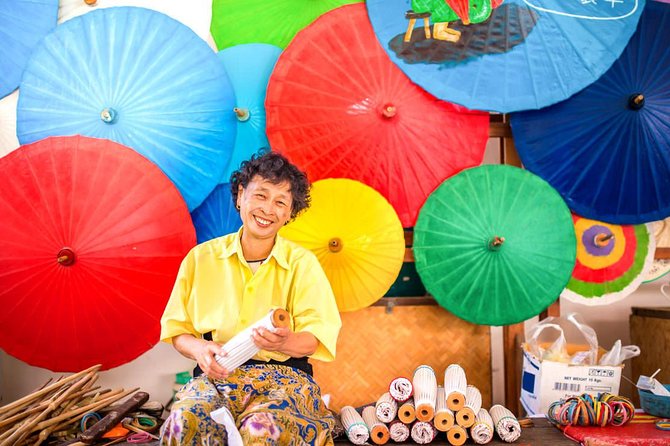
- Umbrellas in Bo Sang: Follow the making of Saa-paper parasols, from mulberry bark paper to finished umbrella.
- Small group, up to 10: A compact group can make it easier to hear the guide and ask questions.
- Hotel pickup included in selected areas: Central Chiang Mai pickup is offered, while hotels farther out may incur a 300 THB charge.
- Four hours, starting at 8:00 am: Expect a morning trip with about 30 minutes of travel to the San Kamphaeng district.
San Kamphaeng makes craft a working subject
Chiang Mai is known for its handicrafts, but it is easy to encounter the finished objects without seeing the work behind them. San Kamphaeng Road, often called the handicraft highway, gives you a look at that production side. This tour takes you into workshops and factories, where you can watch artisans at work and hear how materials become finished goods.
That distinction matters. A shop visit can tell you what an object costs; a demonstration can help you understand why it takes time and skill to make. Hand weaving, wood carving, and paper umbrella production each involve careful steps that are easy to overlook when you are simply browsing a shelf.
The tour is also designed to take the pressure off shopping. You are there to see how the crafts are made, and you can buy something if you find an object you genuinely want. That makes the outing a better fit for curious visitors than for anyone expecting a dedicated bargain-hunting trip.
Other tours people book in Chiang Mai:
- Half-Day Thai Cooking Class at Organic Farm in Chiang Mai
★ 5.0 · 19,087 reviews - Chiang Mai: Elephant Sanctuary, Waterfall & Bamboo Rafting
★ 4.9 · 9,160 reviews - Chiang Mai: Doi Inthanon National Park Eco-Friendly Tour
★ 4.6 · 6,667 reviews
Starting the morning with a hotel pickup
The tour begins at 8:00 am, with pickup from selected hotels in central Chiang Mai. The stated free pickup area includes the Old City, Night Bazaar, Tapae Gate, Chiang Mai Gate, Suan Dok Gate, parts of Huay Kaew Road, Nimman Haemin Road, and Santitham. There is also an option to meet at the McDonald’s at Chiang Mai Night Bazaar.
Pickup details deserve a quick check before you book. The tour information describes the free area as both a three-kilometer radius and selected central neighborhoods, while the surcharge applies to hotels outside five kilometers from the city center. If your hotel is near the edge of the covered area, confirm your exact address with the operator instead of guessing.
The drive to San Kamphaeng takes about 30 minutes. An air-conditioned vehicle is included, a welcome practical detail in Chiang Mai’s warm weather. The tour is listed at around four hours, so the drive and workshop visits make this a substantial but manageable morning outing.
Watching silk take shape by hand
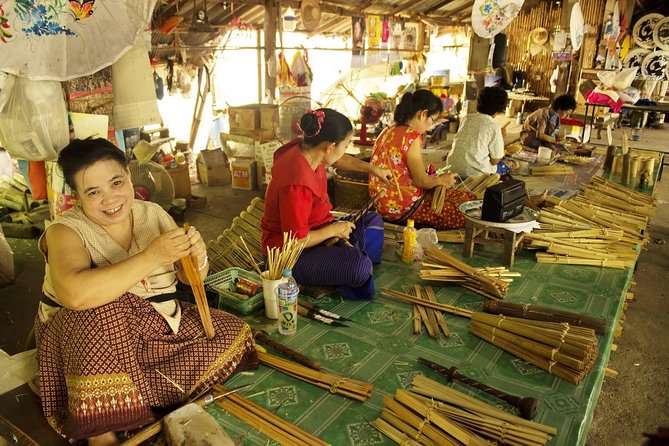
The first major craft stop is in San Kamphaeng, where you visit workshops and production sites. The silk demonstration is a chance to see hand weaving, a method passed down through generations, and to learn about the process involved in producing silk.
The value is in watching the work rather than merely hearing a summary. A woven fabric can look simple once it is finished; seeing the labor and detail behind it gives you a better sense of the skill involved. The guide can also help connect the separate steps of production, so the workshop feels like more than a quick look at a loom.
A past description of the outing also mentions celadon, a type of glazed pottery, made and painted by hand at one of the craft businesses. Since workshop visits can vary, treat that as a possible part of the craft mix rather than a guaranteed stop. Either way, San Kamphaeng’s appeal lies in seeing different trades in their working settings.
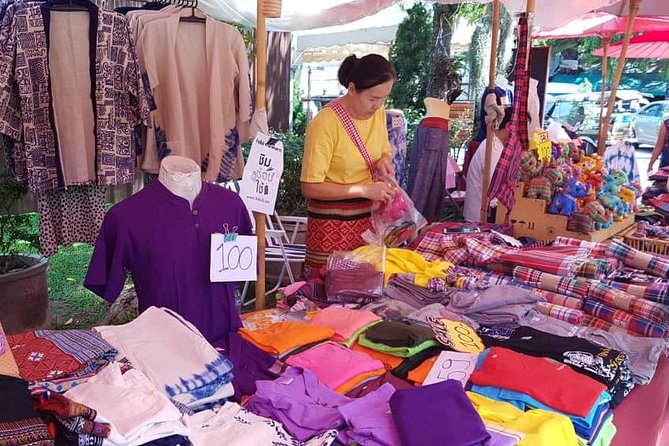
There is a retail element to this district. Workshops and factories often have goods on display, and you may have a chance to purchase something. The tour’s no-pressure framing is useful, but it does not mean every stop will be free of shop browsing. If you are not interested in buying, focus on the demonstrations and ask your guide about the production process.
Baan Jang Nak and the work behind woodcraft
At Baan Jang Nak, a museum of elephant wood carvings, the tour turns to wood and furniture making. You can learn how pieces move from raw material to finished work, with a look at the processes used in a local wood and furniture factory.
This stop offers a different kind of craft lesson from the silk visit. Weaving makes the repeated hand movement easy to see; woodwork reveals how shaping and finishing transform a solid material. The tour also includes a local handicrafts center, with an exhibit of native costumes, jewelry, and household novelties. That range helps you see craft as part of daily life, not only as decorative souvenirs.
The museum’s elephant carvings give this stop a clear focal point. Still, the tour description places the visit alongside a factory and handicrafts center, so expect a mixed stop rather than a long, formal museum tour. If you are especially interested in carving, use the time to ask how the objects are made and what stages the guide can explain.
Baan Jang Nak is also a reminder to think about what you are buying. Wood items can vary greatly in size and finish, and the tour does not include purchases in its price. You can enjoy the craft demonstration without taking home a bulky object.
Same city, a different kind of day:
- Chiang Mai: Elephant Sanctuary & Waterfall Group Tour
★ 4.9 · 5,780 reviews - Chiang Mai: Chiang Rai Temples, Karen Tribe and Hot Springs
★ 4.7 · 5,401 reviews - Chiang Mai: Cooking Class, Market & Thai Herbs Garden Tour
★ 4.9 · 4,824 reviews - Chiang Mai: Authentic Cooking Class with Market & Farm Visit
★ 4.9 · 4,546 reviews
Bo Sang’s paper parasols
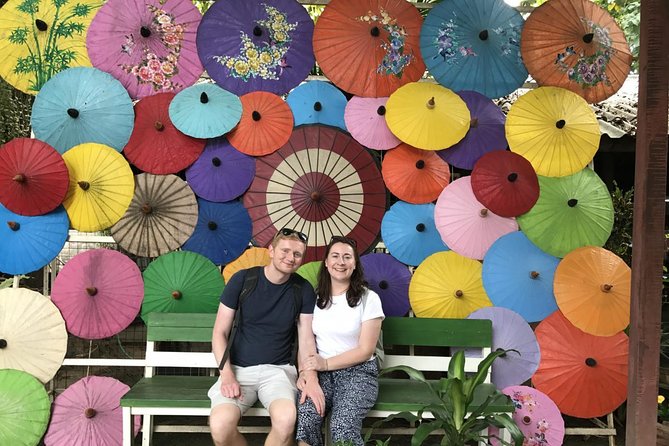
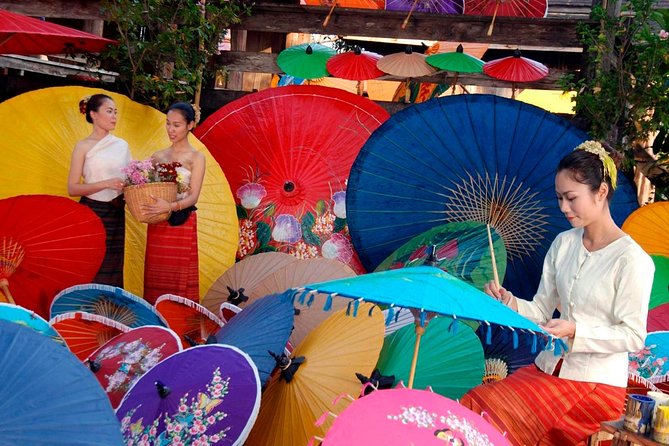
The final major stop is Bo Sang, known as Umbrella Village. Here you see how Saa-paper umbrellas are made from scratch. The paper is made from mulberry bark, then used to create parasols, linking a local material with a familiar, practical object.
This is perhaps the tour’s most immediately memorable process. The umbrella is not just a finished item to photograph or buy; it is the result of several stages of handwork. Watching the making gives you a stronger sense of how much skill and time sit behind a colorful parasol.
After the demonstration, you have about an hour to wander around the district, interact with local people, and shop if you choose. That open-ended time is a welcome change from the more guided workshop visits. It gives you room to look at the finished products at your own pace, but it also means the last part of the tour is less structured.
Bo Sang can be a pleasant place to choose a small souvenir, especially if you want something tied directly to a craft you have just seen. Keep in mind that no purchases are included, and the tour does not specify a shopping budget or time for bargaining. Buy only if the object appeals to you, not because the stop makes you feel obliged.
What $65 gets you
At $65 per person, the price covers a guide, visits to the handicraft businesses, an air-conditioned vehicle, and hotel pickup and drop-off at selected locations. The main value is the combination of transport and access to several types of production in one half-day. Arranging separate transport and trying to identify appropriate workshops on your own would take more planning.
A group capped at 10 is another useful part of the price. It is not a private tour, but the small maximum can make demonstrations easier to follow than they would be in a large coach group. It also gives you a more realistic chance to ask the guide questions as you move from one craft to another.
The tour costs more than simply taking a taxi to a shopping district, but that is not quite an equal comparison. You are paying for guided visits and the context that explains what you are seeing, as well as for the round trip. If you mainly want to shop, you may not need this experience. If you want to understand the making behind Thai crafts, the added cost is easier to justify.
Allow for the possible 300 THB pickup surcharge if your hotel is outside the stated central area. That fee is payable on the day, so check your pickup eligibility in advance and include it when comparing the total cost.
Group size, timing, and comfort
The tour lasts about four hours and starts at 8:00 am. The listed stops add up to roughly three hours, plus about 30 minutes to reach San Kamphaeng. The remaining time allows for moving between locations and the return trip, though the exact schedule may vary.
Wear comfortable walking shoes, as advised. You will be moving between workshops and spending time on your feet, even if the tour is not described as strenuous. Most people can participate, and children must be accompanied by an adult.
The small group format is a practical advantage, not a promise of an intimate private experience. The maximum is 10 people, and the quality of the visit will still depend in part on the guide and the activity at each workshop. One past account recalled a guide whose name sounded like Ooh Lala, though the spelling was uncertain. The important point is that a guide leads the visits and helps explain the crafts; do not rely on that name when arranging your tour.
Who should book this craft tour
I would recommend this outing if you are interested in how Chiang Mai’s crafts are produced and want to see several different trades without arranging separate visits. It suits curious visitors, shoppers who like to understand an object before buying it, and anyone who wants a break from temples and city sightseeing.
It can also work well for families, provided children are accompanied by an adult and are comfortable with workshop visits. The mix of silk, wood, and umbrella making offers more variety than spending the whole morning in one factory. The vehicle and central pickup make the logistics simple.
You may want to skip it if you are not interested in craft production or if you dislike stops where goods are available for sale. The tour is also not a deep look at one single art form. Its strength is breadth: several workshops and craft traditions in one morning, with limited time at each.
Should you book it?
Book this tour if you want to see artisans at work and value having transport and a guide arranged for you. Silk weaving, woodcraft, and Saa-paper umbrella making give the morning a clear focus, while the group limit of 10 keeps it from feeling like a large bus excursion.
Before paying, confirm that your hotel qualifies for free pickup and decide whether a shopping-oriented final stop suits you. At $65, the outing makes the most sense for people who want context as well as craft stalls. If that sounds like your kind of Chiang Mai morning, it is a practical way to get beyond the finished souvenirs and see the hands-on work behind them.
FAQ
How long is the tour?
The tour lasts about four hours.
What time does the tour start?
The stated start time is 8:00 am.
Where does the tour visit?
It visits craft businesses in San Kamphaeng, Baan Jang Nak, and Umbrella Village in Bo Sang.
What crafts can I see being made?
You can watch silk weaving, wood and furniture work, and the production of Saa-paper umbrellas from mulberry bark paper.
Is hotel pickup included?
Pickup and drop-off are included for selected hotels in central Chiang Mai. An additional 300 THB surcharge applies to pickup and drop-off outside the stated area.
How many people are in the group?
The tour has a maximum of 10 participants.
Are purchases included in the $65 price?
No. The listed price does not include any items you may choose to buy.
Can children join the tour?
Yes. Children must be accompanied by an adult.
Newest tours in Chiang Mai
- 6 Days Golden Triangle Loop from Chiang Mai★ 5.0 · 8 reviews
- Walk With Monks Collecting Alms(meeting point maybe change)★ 4.9 · 8 reviews
- Workshop Making Herbal ball & herbal inhaler★ 4.3 · 3 reviews
- Zipline+Sticky waterfall+Long Neck Village Private Tour★ 5.0 · 22 reviews
- Chiang Mai Zipline White Water Rafting and Elephant Sanctuary★ 4.0 · 11 reviews
- Trek to a Jungle Waterfall★ 5.0 · 14 reviews
- Full Day Yoga, Meditation, and Thai Cultural Immersion in Chiang Mai★ 5.0 · 3 reviews
- 2 Hours Wow hatcha lanna package – Free transportation★ 5.0 · 31 reviews
Chiang Mai Tours, compared.
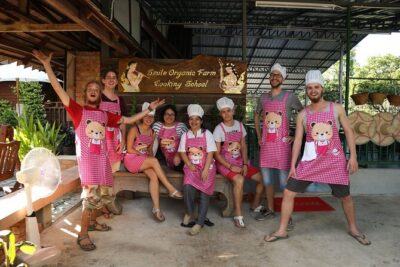
Half-Day Thai Cooking Class at Organic Farm in Chiang Mai
Read our review →
Elephant Sanctuary, Waterfall & Bamboo Rafting
Read our review →


Chiang Rai Temples, Karen Tribe and Hot Springs
Read our review →
Cooking Class, Market & Thai Herbs Garden Tour
Read our review →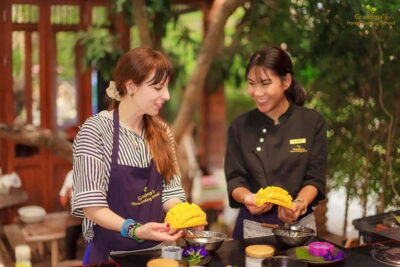
Authentic Cooking Class with Market & Farm Visit
Read our review →