
Reviewed · CHIANG MAI WALKING TOURS
Chiang Mai: Historic Temples and City Guided Walking Tour
Chiang Mai’s old city makes more sense when you see its temples in sequence. This small-group walk connects four landmark temples with the Three Kings Monument, giving you a look at Lanna architecture and local Buddhist traditions along the way. Wat Chiang Man dates to 1296, while Wat Phan Tao’s main hall is built almost entirely of teak.
I like two things about this route: it brings the city’s history into view at the places where it unfolded, and a group capped at 10 gives you room to ask questions. Guides such as Jen, Pun and Danny have been singled out for clear explanations, friendly pacing and useful local suggestions. One consideration: the three-hour walk includes outdoor stretches, and you’ll need to pay separate entry fees at Wat Phra Singh and Wat Chedi Luang.
At a glance
- Four temples, one old-city route: Visit Wat Chiang Man, Wat Phra Singh, Wat Phan Tao and Wat Chedi Luang, with a stop at the Three Kings Monument.
- A small group: No more than 10 participants, so it’s easier to hear the guide and ask about details.
- A modest base price: The tour costs $21 per person, with two additional temple tickets at 50 THB each.
- A useful first-day introduction: Expect context on Chiang Mai, Lanna architecture and Buddhism, not just time for photographs.
- Temple clothing matters: Cover shoulders and knees, and bring a scarf if you need an easy extra layer.
- Walking, not a ride: Comfortable shoes, sun protection and a rain plan are sensible, especially from July to mid October.
A three-hour walk through Chiang Mai’s old city
This is a guided walking tour, not a hop-on, hop-off circuit. You meet at Wat Chiang Man and finish at Wat Chedi Luang, moving west through the old city on foot. The planned visits add up to about two hours and 15 minutes, leaving the rest of the three-hour slot for the walks between stops.
That format is useful if you want to understand how the temples fit into the city rather than see them as separate photo stops. Your guide provides the connecting thread: local history, temple details and Buddhist customs. Several guides, including Jen, Pun, Danny, Jane and John, have been praised for explaining clearly and making time for questions. The particular guide can vary, so treat those names as examples rather than a promise.
The pace is described as relaxed, though you’ll still be on your feet for most of the outing. Guides have also helped keep groups together on busy roads and pointed out restrooms. If you have back problems or are pregnant, this activity is listed as unsuitable. For anyone else, it’s worth being realistic about heat, walking and the need to dress for temple visits.
More walking tours in Chiang Mai:
- Chiang Mai: 3 Hour Old City and Temples Guided Walking Tour
★ 4.6 · 1,568 reviews - Chiang Mai: Temple And City Walking Tour Part I
★ 4.7 · 244 reviews - Chiang Mai: Local Food and Markets Guided Walking Tour
★ 4.3 · 175 reviews
Wat Chiang Man: the oldest temple on the route
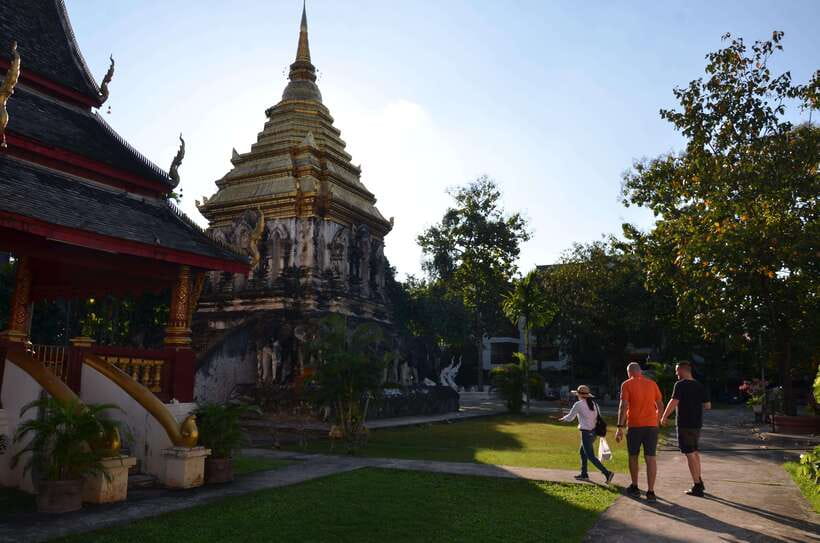
The walk begins at Wat Chiang Man, built in 1296 and regarded as Chiang Mai’s oldest temple. This is a fitting place to start: you can meet the city at one of its earliest religious landmarks before following the route into the heart of the old town.
Allow about 30 minutes for the visit. Your guide can help you look beyond the overall temple setting and notice its architectural details, while putting the site into the story of Chiang Mai. That context can make a first temple visit more rewarding, especially if you’re new to Thai Buddhism or unsure what to look for.
The meeting point is at Wat Chiang Man. Look for the Beyond Experience sign, but don’t rely on the sign alone: one participant had trouble spotting it and was helped by the guide through WhatsApp. Arrive with enough time to find the group, and check your messages if you’re having trouble locating them.
Three Kings Monument: a pause in the old town
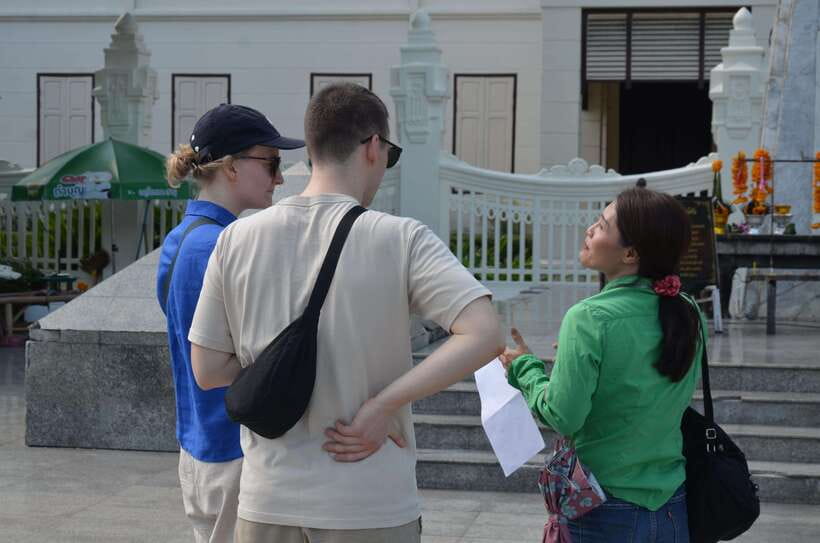
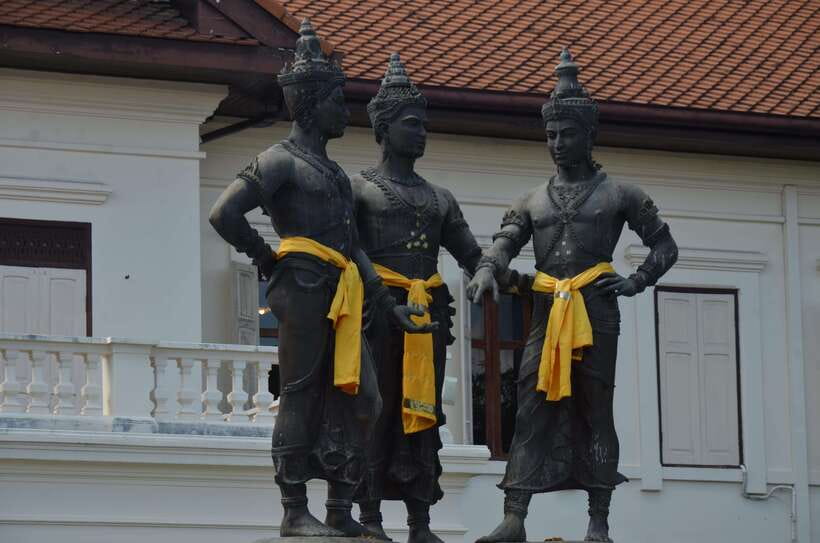
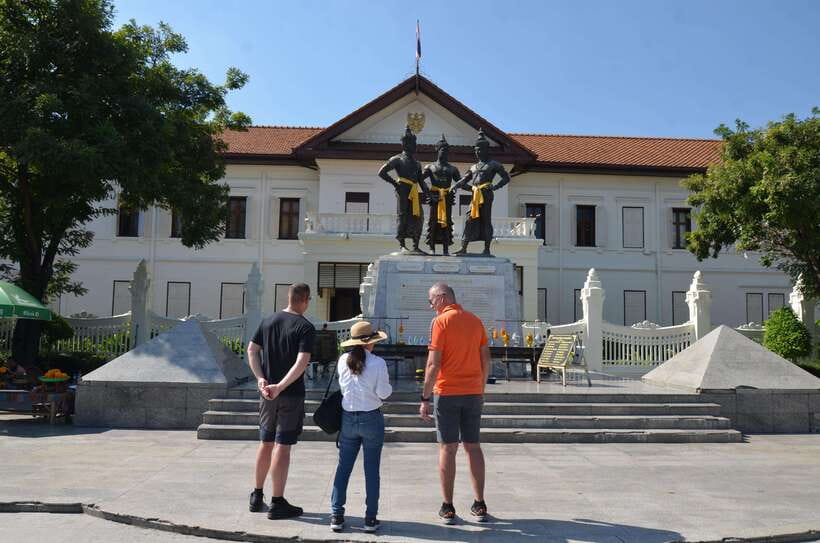
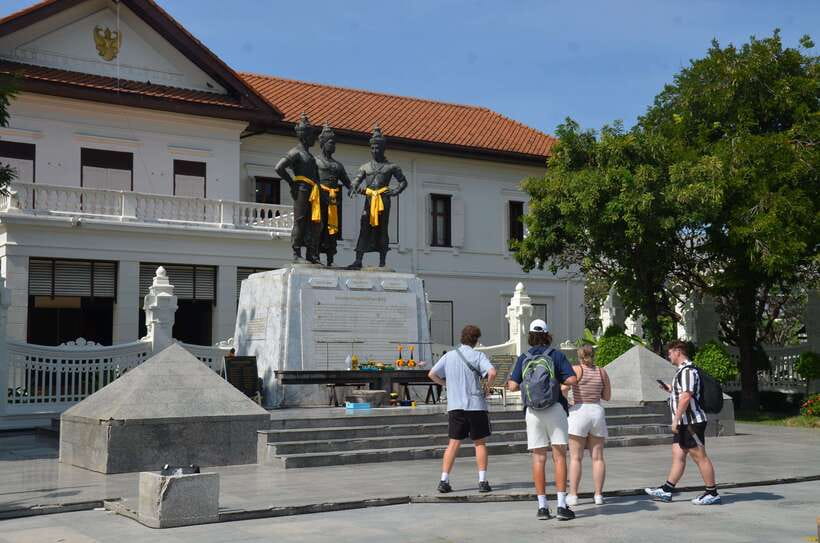
From Wat Chiang Man, the route heads west to the Three Kings Monument, a large open square in the centre of the walled old town. The stop is short, about 10 minutes, and works as a change of pace between temple visits.
Here, the guide can connect Chiang Mai’s civic story with the religious architecture you’ve just seen. It’s also a chance to get a sense of the old town’s layout as you move between neighbourhood streets and major landmarks. Don’t expect a long museum-style visit; this is a brief outdoor stop and photo opportunity.
The walk between sights is part of the experience. You’ll pass ordinary city streets rather than being carried from one polished monument to the next. That makes the tour a practical way to get your bearings and may lead you past shops or cafés you’ll want to return to later.
Wat Phra Singh: Lanna architecture in close view
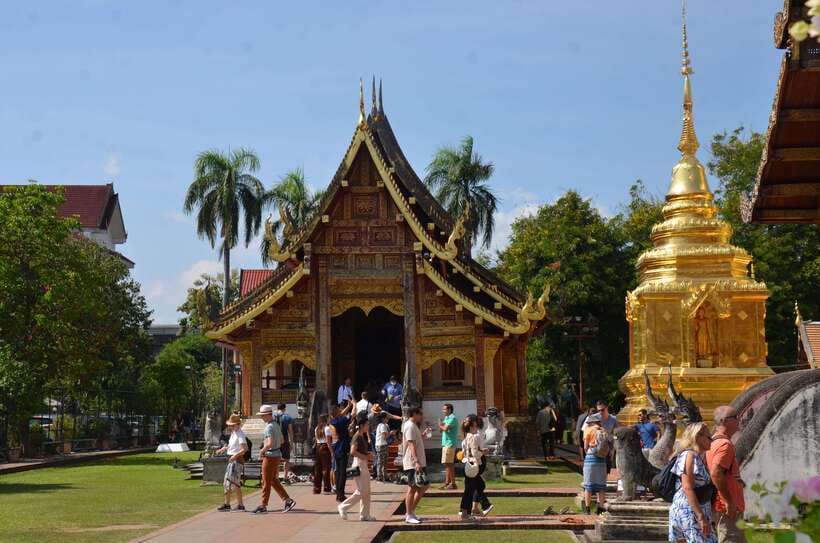
Wat Phra Singh is one of the route’s major stops, with about 40 minutes to look around. It’s known as one of Thailand’s finest examples of classic Lanna-style temple architecture. If you’re interested in the region’s visual character, this is a good place to slow down and hear what distinguishes its design.
A guide adds value here by explaining the details and their meaning, rather than leaving you to take in a beautiful building without context. Guides on this tour have been praised for answering questions and giving enough detail to make the visit clear without turning every stop into a lecture. You should still leave yourself time to look around and take photographs.
There is a separate entrance fee of 50 THB for Wat Phra Singh. Bring cash, since the ticket is not included in the tour price. The temple also calls for the same respectful dress as the other religious sites: shoulders and knees covered.
More history tours in Chiang Mai:
- Chiang Mai: Historic Old City Bike Tour – Morning or Night
★ 4.7 · 263 reviews - Chiang Mai: Historic Old City Bike Tour – Morning or Night
★ 5.0 · 202 reviews - Chiang Mai: Private Historic Old City Bike Tour – Night
★ 4.7 · 143 reviews - Chiang Mai: Historical and Culture Exploration Walking Tour
★ 4.6 · 40 reviews
Wat Phan Tao: a hall built from teak

Wat Phan Tao offers a change in materials and mood. Its main ordination hall, or viharn, is made almost entirely of teak wood. The building originally formed part of a royal palace, and its main hall features a large teak throne once used by Chiang Mai’s rulers.
The scheduled visit is about 15 minutes, so this is a compact stop. It gives you a chance to compare the wooden structure with the other temple architecture on the route and hear how the building’s earlier use connects it to the city’s rulers. Even a brief visit can add variety to a walk centred on temples.
This is one of the reasons I like the route’s mix of stops: it doesn’t treat every temple as the same kind of sight. You move from an early city temple to a celebrated Lanna example, then pause at a distinctive wooden hall before reaching the final large chedi.
Wat Chedi Luang: the route’s dramatic finish
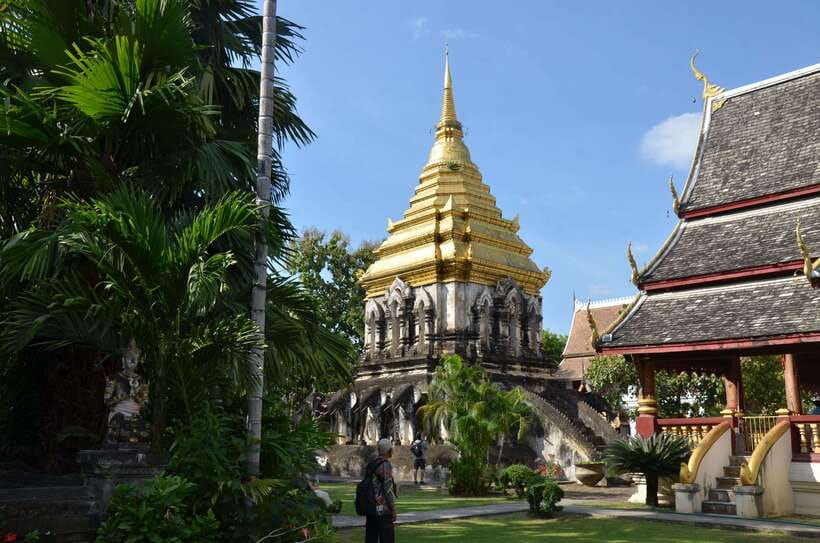
The tour ends at Wat Chedi Luang, with roughly 40 minutes to explore. Its ruined chedi is the landmark that gives the final stop its visual force. The main prayer hall also contains a majestic standing Buddha, another important focus of the visit.
The guide can help you read the site as more than an impressive ruin, explaining its place among Chiang Mai’s temples and drawing attention to the prayer hall. If you want extra time to explore at your own pace, ask how the group’s end point and schedule work before you set off. The guided visit is part of the three-hour tour, but it does not replace an independent return visit if you want to linger.
Entry costs another 50 THB, paid separately. Together, the two temple tickets add 100 THB to the $21 tour price. That’s still a reasonable outlay for a three-hour guided introduction, but it’s useful to include the fees in your budget rather than treating the advertised price as the full cost.
What the $21 price gets you
The tour includes a local English-speaking guide and a bottle of water. You’re paying for a structured route and someone who can explain the sites as you go, not for transport or meals. Food is not included, so plan to eat before or after the walk.
For $21, the strongest value is the historical and cultural context across several major sights in one outing. The small-group limit of 10 matters here: with a guide explaining temple details, a compact group makes it easier to hear and to ask about things that catch your eye. At times the group may be smaller; a few participants have found themselves in groups of just two or four, though group size can vary.
The ticket fees are modest, but they are a real extra. Carry cash for both, and bring a little more if you want to buy food or drinks after the tour. Some guides have offered café or food suggestions, including a recommendation for khao soi, but meals remain your own expense.
Dress, weather and walking comfort
Temples require covered shoulders and knees. Shorts, short skirts and sleeveless shirts are not allowed, so choose comfortable clothes that meet the dress code. A scarf can be a handy extra layer, but it should provide enough coverage when you enter temple grounds.
Comfortable walking shoes are a better choice than shoes meant only for photographs. A hat and sunscreen will help in the sun, while an umbrella or raincoat is useful during the rainy season, from July to mid October. The tour suggests bringing an umbrella, and Chiang Mai’s weather can make that advice more than a formality.
Leave large bags and luggage behind, as they are not allowed. The tour is designed for walking and includes time outdoors, so carry only what you need: water is provided, but you may want cash, sun protection and a way to cover up.
Who will get the most from this walk?
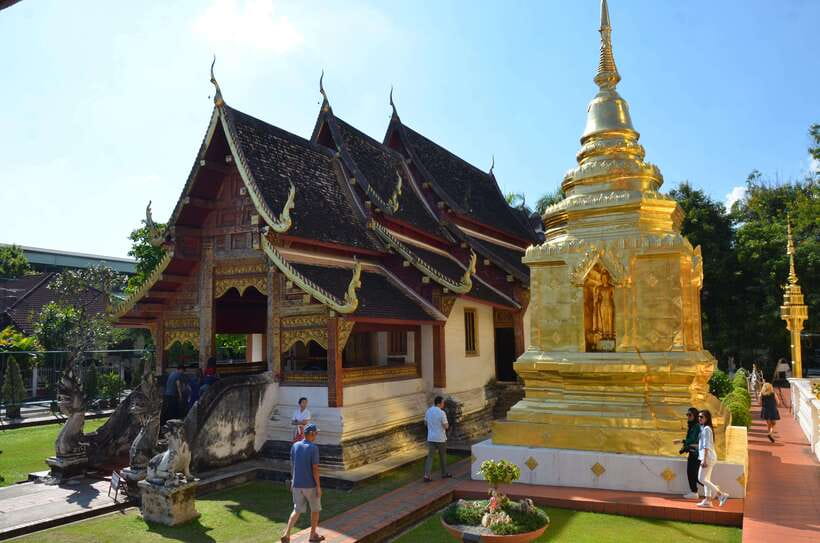
I’d recommend this tour most to first-time visitors who want a grounded introduction to Chiang Mai’s old city. You’ll see several notable temples, hear how they relate to the city and its Buddhist traditions, and get a route you can revisit on your own. It’s particularly useful early in a stay, when a little context can help the rest of your temple visits feel less like a series of similar buildings.
It also suits people who prefer to explore on foot and learn through conversation. Guides have been praised for patience, clear English, humour and a relaxed pace. If you have questions about the temples or local customs, a small group gives you a better chance to ask them than a large coach tour would.
This may be less suitable if you want a private, unhurried visit at each site, dislike walking in heat or rain, or need a tour that avoids outdoor stretches. The stop at Wat Phan Tao is relatively brief, and the tour moves on after each scheduled visit. Think of it as a well-paced introduction, not a deep study of each temple.
Should you book it?
Book this walk if you want a low-impact, reasonably priced way to understand Chiang Mai’s old city, with a local guide to connect its temples and history. The route has a good mix of landmark architecture, a teak hall and a major ruined chedi, and the small-group format is a practical plus.
Skip it if you’d rather visit temples independently and set your own pace, or if a three-hour walk is not a good fit. If you do book, go early if you can to avoid the strongest heat, wear temple-appropriate clothes, and bring cash for the 100 THB in entry fees. The tour also offers free cancellation up to 24 hours in advance and a reserve-now, pay-later option.
FAQ
How long is the walking tour?
The tour lasts three hours. It visits four temples and the Three Kings Monument, with walking time between stops.
Where does the tour start?
Meet your guide at Wat Chiang Man and look for the Beyond Experience sign. If you have trouble finding the group, check your messages for contact from the guide.
Where does the tour finish?
It finishes at Wat Chedi Luang, also known as Wat Chedi Luang Varaviharn.
What is included in the price?
The price includes a local English-speaking guide and a bottle of water. Food and temple entrance tickets are not included.
How much are the temple entrance fees?
Wat Phra Singh costs 50 THB to enter, and Wat Chedi Luang costs 50 THB. Bring cash for both fees.
What should I wear to visit the temples?
Cover your shoulders and knees when entering temples. Shorts, short skirts and sleeveless shirts are not allowed.
What should I bring?
Wear comfortable shoes and bring a hat, sunscreen, cash and a scarf if you need extra coverage. An umbrella or raincoat is useful, especially during the July to mid October rainy season.
Is the group small?
Yes. The group is limited to 10 participants.
Who is this tour not suitable for?
The tour is listed as unsuitable for pregnant women and people with back problems.
Newest tours in Chiang Mai
- 6 Days Golden Triangle Loop from Chiang Mai★ 5.0 · 8 reviews
- Walk With Monks Collecting Alms(meeting point maybe change)★ 4.9 · 8 reviews
- Workshop Making Herbal ball & herbal inhaler★ 4.3 · 3 reviews
- Chiang Mai Zipline White Water Rafting and Elephant Sanctuary★ 4.0 · 11 reviews
- Zipline+Sticky waterfall+Long Neck Village Private Tour★ 5.0 · 22 reviews
- Full Day Yoga, Meditation, and Thai Cultural Immersion in Chiang Mai★ 5.0 · 3 reviews
- 2 Hours Wow hatcha lanna package – Free transportation★ 5.0 · 31 reviews
- Trek to a Jungle Waterfall★ 5.0 · 14 reviews
Chiang Mai Walking Tours, compared.
3 Hour Old City and Temples Guided Walking Tour
Read our review →

Chiang Mai Untouched Elephant: Nature Walk & Waterfall Trek
Read our review →

Chiang Mai Old City & Temples Guided Walking Tour – 3 Hrs
Read our review →
Chiang Mai Temples Visit Walking Tour with Ex-Monk Guide Part 1
Read our review →
Browse the lists this tour appears in