
Reviewed · CHIANG RAI DAY TRIPS
Chiang Mai: Chiang Rai Temples and Long-Neck Karen Village
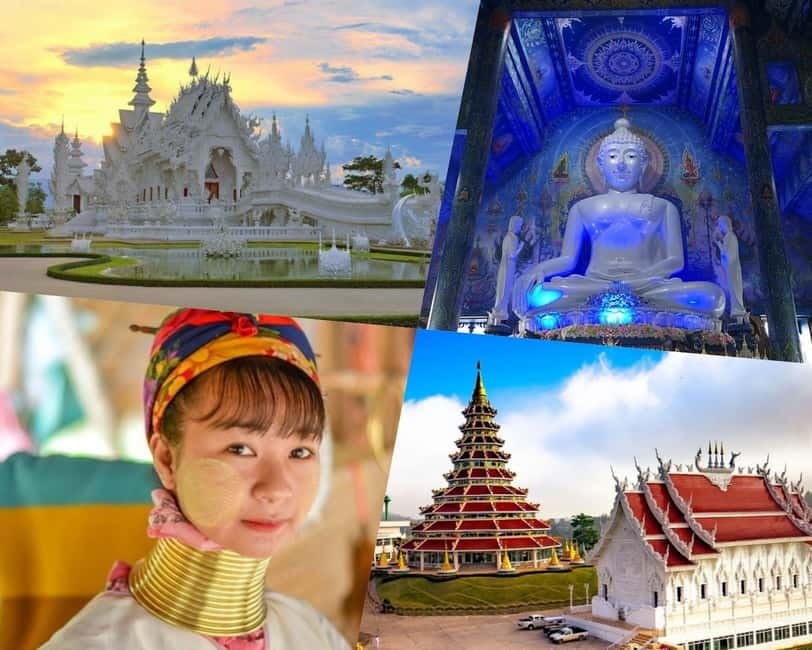
The White Temple is the sort of place that makes you stop mid-step: bright white forms, mirrored details, and Buddhist imagery mixed with contemporary art. This day trip pairs it with Chiang Rai’s Blue Temple and a towering Guan Yin statue, then adds hot springs and a Karen village.
I like two things about the route: you get several very different sights in one day, and the small-group cap of 12 gives the guide more chance to answer questions than a large coach tour would. Lunch, entry fees, water, and transport are included, which makes the $61 price easier to judge.
One consideration is the pace. Chiang Rai is a full-day outing from Chiang Mai, and the itinerary includes several stops. The hot springs are a short leg-stretching break rather than a secluded nature retreat, and the Karen village visit calls for respectful expectations and photography.
- White Temple: See a striking white exterior covered in reflective details, with Buddhist symbols and contemporary art.
- Mae Kachan Hot Springs: Stretch your legs, warm your feet in mineral pools, and try the local novelty of boiling eggs in bubbling water.
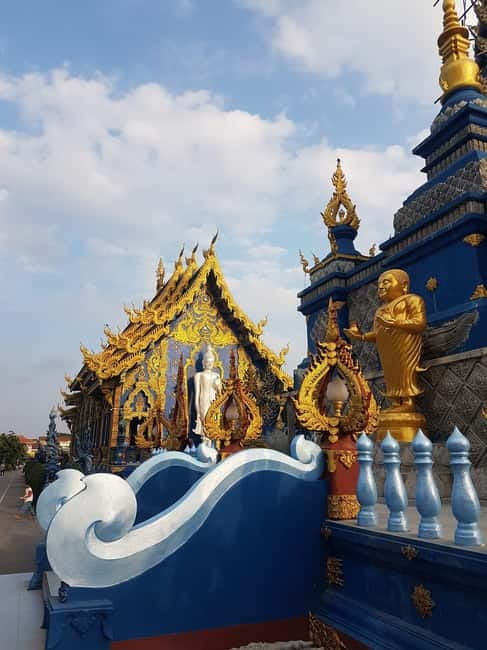
- Blue Temple: Take in deep blue tones, gold accents, and an ornate Buddha statue.
- Wat Huay Pla Kang: Ride an elevator inside the 25-story Guan Yin statue for broad views, then see the nine-tiered pagoda and gardens.
- Karen village visit: Learn about local traditions, daily life, and crafts, while asking permission before photographing people.
- Small-group inclusions: Air-conditioned transport, an English-speaking guide, admission, lunch, bottled water, and insurance are part of the $61 fare.
A full day of Chiang Rai contrasts
This outing is built around contrast. At the White Temple, art and religious symbolism meet in a dazzling, modern structure. At the Blue Temple, saturated color and gold detailing set a different mood. Wat Huay Pla Kang shifts the focus to scale and views, while the village visit brings the day back to people and everyday culture.
You will also stop at Mae Kachan Hot Springs, where the appeal is partly practical: it breaks up the journey and gives you a chance to stretch. Taken together, the stops make this a varied introduction to Chiang Rai, rather than a day spent at one site in depth.
That variety has a trade-off. Each stop has a limited place in a busy day, and the pace may feel brisk if you prefer lingering in temples or asking many questions. The itinerary can also shift slightly with traffic, weather, or group preferences, so treat the order as flexible.
Mae Kachan’s warm-water pause
The first stop is Mae Kachan Hot Springs. You can dip your feet in the warm pools, which are believed to have therapeutic properties, or watch the bubbling water and try boiling eggs in it. It is an unusual little ritual, and a welcome change from sitting in the van.
Keep your expectations grounded. This is a practical stop for a pause and a curiosity, not a long soak in a remote hot-spring setting. The springs have been described as being beside a parking area rather than surrounded by nature. If you picture a quiet forest pool, this stop may disappoint; if you treat it as a brief, quirky break, it fits the day well.
Bring comfortable shoes, and have your camera ready if you want a picture of the bubbling pools. The tour information does not specify how long you will stop, so avoid planning your day around an extended visit here.
More Chiang Rai day trips in Chiang Mai:
- Chiang Mai: Chiang Rai Temples, Karen Tribe and Hot Springs
★ 4.7 · 5,401 reviews - Chiang Rai White Temple and Blue Temple Day Tour
★ 4.6 · 3,366 reviews - Chiang Rai Temples: Private Tour from Chiang Mai
★ 5.0 · 1,267 reviews
Wat Rong Khun, the White Temple
Wat Rong Khun is the headline sight for many people. Its white exterior is decorated with small mirrored pieces that catch the light, giving the temple a glittering appearance. The design blends Buddhist symbolism with contemporary art, so the experience is not simply about admiring a traditional building.
Inside, murals and sculptures explore ideas of life, death, and rebirth. That mix can be striking, and it gives you more to consider than the ornate exterior alone. Take time to look closely, but remember that this is a sacred place as well as a major visual attraction.
The practical rule is modest dress: shoulders and knees should be covered. Comfortable shoes matter too, since the day involves walking and stairs. Bring a hat and sunscreen for time outdoors, and keep in mind that the tour visits several sites, so you may need to make choices about where to spend extra minutes.
Lunch between temple visits
Lunch is included at a local restaurant, which saves you from having to find a meal during a tightly planned day. Bottled water is also provided, and admission fees are covered, so the quoted $61 price includes the main expenses at the scheduled stops.
The meal should be treated as a convenient break, not a dining destination. Food quality can vary, and one account of a similar visit described the meal as basic. If you have dietary needs, the details provided do not confirm whether special meals can be arranged, so ask the operator before booking rather than assuming.
This is also a useful moment to reset. You have already seen one major temple and still have the Blue Temple, Wat Huay Pla Kang, and the village ahead. Drink water, check that you have your hat and camera, and make sure your shoulders and knees remain covered for the sacred sites.
Wat Rong Suea Ten, the Blue Temple
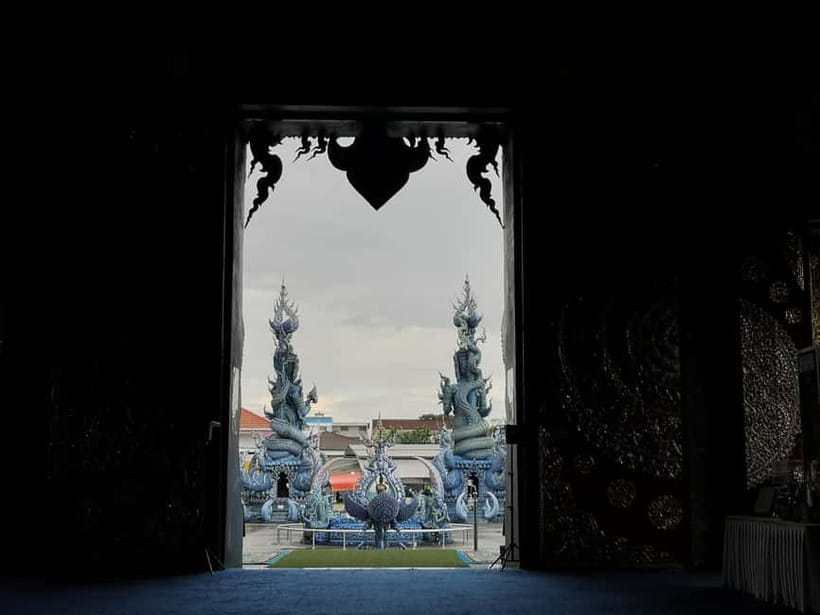
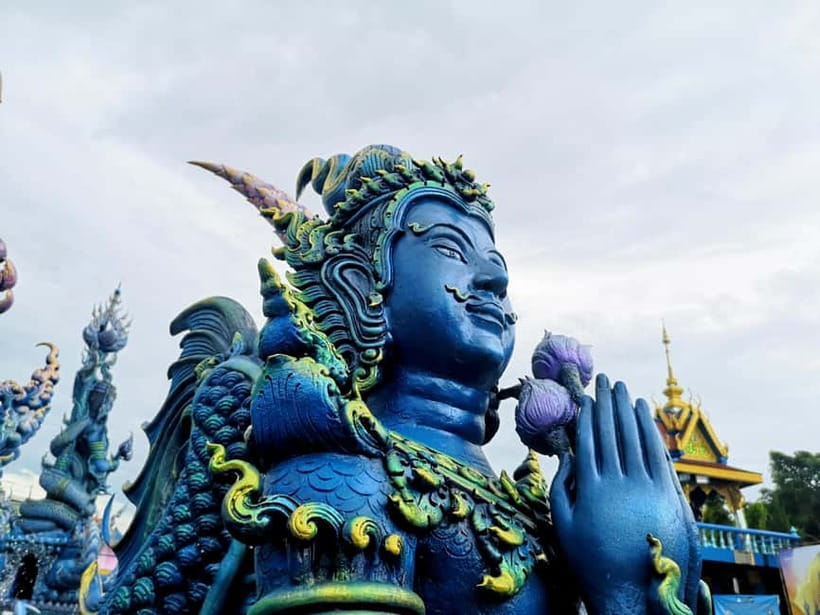
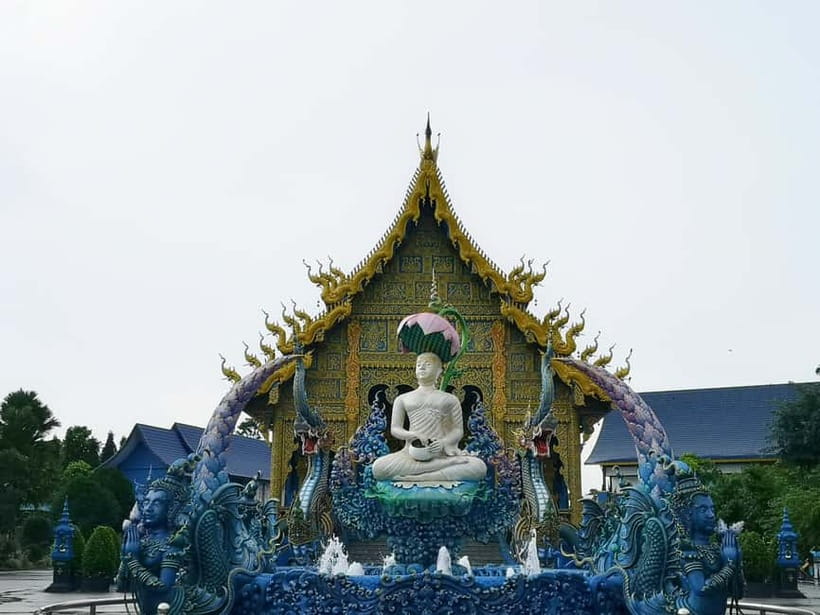
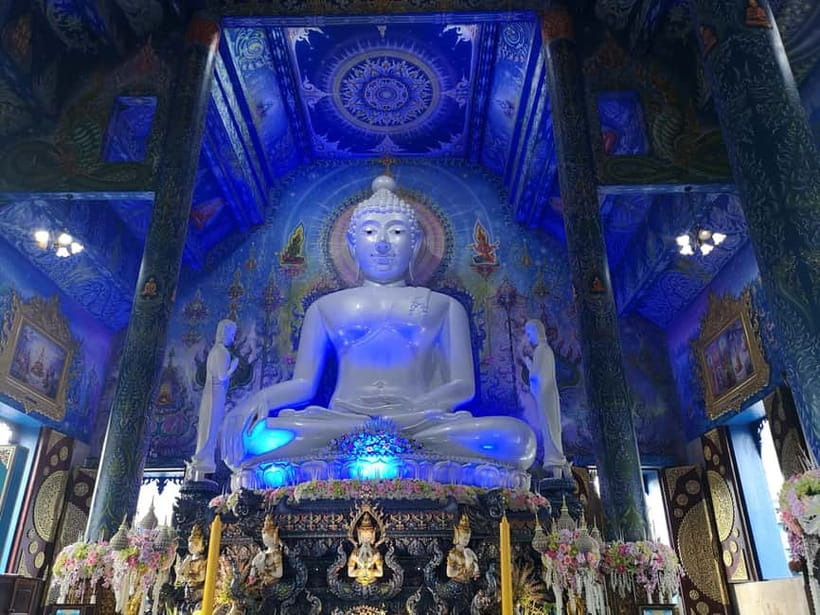
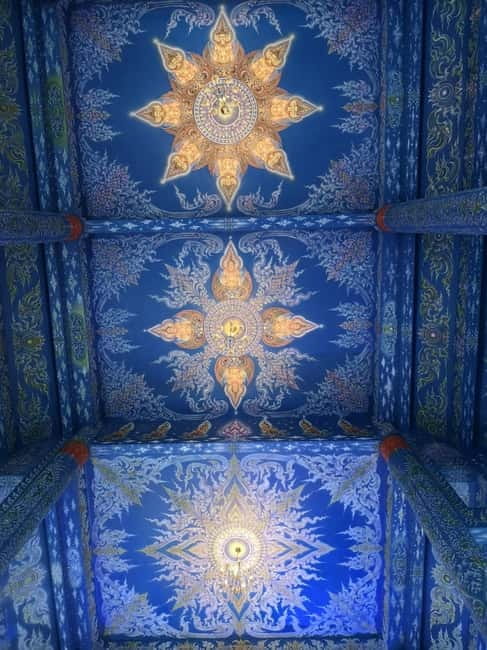
Wat Rong Suea Ten offers a strong visual change after the White Temple. Its deep blue tones and gold accents create a more intense palette, and the temple’s Buddha statue gives the interior a clear focal point. It is a good stop for photographs, but it also rewards a slower look at the decorative detail.
I like this pairing because the two temples are not interchangeable. The White Temple draws attention with its bright surface and modern imagery; the Blue Temple uses color and ornate decoration to create a different effect. Seeing both in one day helps you compare styles rather than leaving with one repeated impression.
As at the other sacred sites, behave respectfully and follow your guide’s instructions. The provided information does not specify photography rules inside every temple, so look for posted signs and ask before taking pictures where you are unsure.
More hill tribe visits in Chiang Mai:
- Chiang Mai: Elephant Sanctuary, Long Neck & Sticky Waterfall
★ 4.9 · 2,262 reviews - 4-Hour Doi Suthep & Hmong Hill Tribe Village from Chiang Mai
★ 4.7 · 696 reviews - Chiang Mai: Doi Inthanon, Waterfalls, & Tribal Villages Tour
★ 4.2 · 484 reviews - Chiang Mai: Long Neck Village & Chiang Rai’s Iconic Temples
★ 4.3 · 338 reviews
Wat Huay Pla Kang and the Guan Yin statue
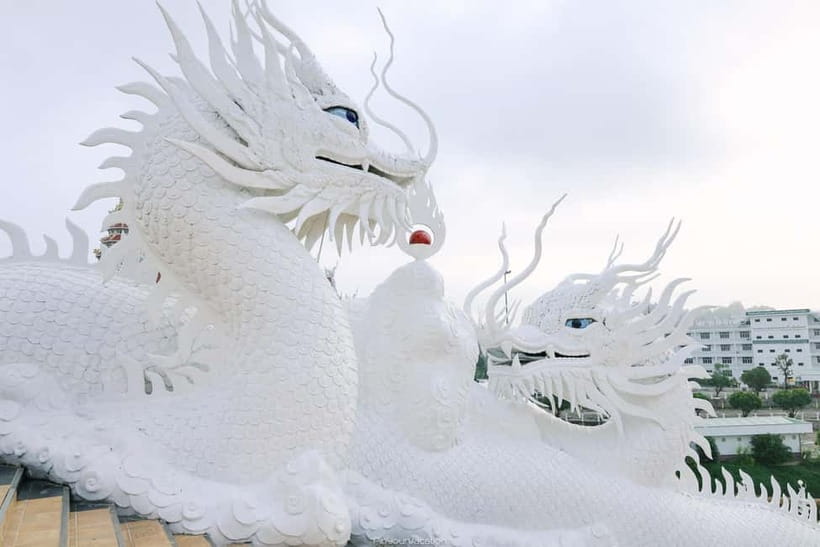
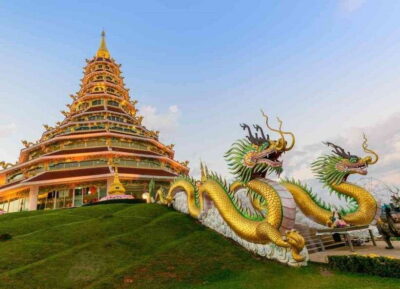
At Wat Huay Pla Kang, the scale changes again. The site is home to a colossal Guan Yin statue described as 25 stories tall. An elevator takes you to the top for wide views over the surrounding area, making this the day’s clearest high viewpoint.
There is more to see beyond the statue. The complex includes an elegant nine-tiered pagoda and tranquil gardens, offering a quieter counterpoint to the huge figure. If you enjoy architecture, give yourself time to notice the pagoda’s form and the grounds, rather than treating the stop as only an elevator ride.
The climb and walking are worth considering before you book. The tour is not suitable for wheelchair users or people with back problems, and it is not recommended for pregnant women or people over 220 pounds (100 kilograms). The day also includes stairs and walking, so this is not the best choice if you need a low-mobility itinerary.
Meeting the Karen community respectfully
The final stop is a Long Neck Karen village. The community is known for brass neck rings, and the visit is intended to introduce you to traditions, daily life, and craftwork. You may also support the community by buying handmade souvenirs.
Approach this stop with curiosity, not as a photo set. Ask permission before taking pictures of individuals, and avoid intrusive photography. The rings are part of a living cultural tradition, and a respectful visit means listening and engaging without treating people as attractions.
Your experience here may depend on the time available and the quality of the guide’s explanation. The village stop can feel less meaningful if you are rushed or receive little context. Ask thoughtful questions, and allow the people you meet to set the terms of any interaction. If cultural learning is your main reason for booking, remember that this is one stop in a packed day, not a long community visit.
The guide, group size, and ride
The tour is limited to 12 participants and includes an English-speaking guide. A small group can make it easier to hear explanations and ask questions, and one account of the trip described personal attention and a comfortable, high-end vehicle. Other experiences can vary: communication may be less clear if a guide’s English is limited, and late arrivals can interrupt the group’s rhythm.
That makes punctuality and clear expectations important. The guide may need to keep the day moving to reach all the stops, so this is not ideal if you want an unhurried private tour. The van is air-conditioned, but comfort on the ride can still depend on the vehicle and your tolerance for a full day of transport.
You can ask the guide questions as you go, especially at the temples and village. The available details do not name a specific guide, so you cannot request a particular person based on this information.
Is $61 good value?
At $61 per person, this tour bundles transport, an English-speaking guide, all listed admission fees, lunch, bottled water, and insurance. That is a clear advantage if you want several major Chiang Rai sights without arranging each transfer and ticket yourself. A group capped at 12 also offers a more personal format than a large coach, though it is not a private tour.
Value depends on what you want from the day. If your priority is seeing the White Temple, Blue Temple, Wat Huay Pla Kang, and the Karen village in one outing, the price covers a lot. If you want long stretches at each site, a secluded hot spring, or an in-depth cultural exchange, the schedule may feel too compressed.
The booking terms offer some flexibility: you can reserve without paying immediately and cancel up to 24 hours in advance for a full refund. Check availability for the start time, and remember that the exact sequence may change with traffic or weather.
What to bring and how to prepare
Wear clothing that covers your shoulders and knees for the temples. Choose comfortable shoes because you should expect walking and stairs, and pack a hat, sunscreen, and camera. Water is included, but carrying your own is sensible if you like to have it close at hand.
Pets and smoking are not allowed. The tour is not suitable for pregnant women, people with back problems, wheelchair users, or people over 220 pounds (100 kilograms). These limits matter here because the day combines road travel, walking, and temple stairs.
I would also plan for a full, varied day rather than a leisurely one. Keep your belongings easy to reach, follow the guide’s timing, and be prepared for itinerary adjustments. At the Karen village, ask before photographing people and consider buying crafts only if you genuinely want them.
Should you book this Chiang Rai day trip?
Book it if you want a guided, one-day sampler of Chiang Rai’s best-known temples, a giant Guan Yin statue, a hot-spring stop, and a Karen village visit. The included transport, tickets, lunch, and water make the $61 fare straightforward to assess, and the small-group cap is a plus.
Skip it if you want to spend hours at one temple, expect the hot springs to feel remote, or need a slow-paced and highly accessible day. The Karen village stop also works best when you bring patience and respect, rather than expecting a staged cultural show. For a first look at Chiang Rai with several distinct sights in one day, this is a practical choice, as long as you are comfortable with a full schedule.
FAQ
What is included in the $61 price?
The price includes air-conditioned van transport, an English-speaking guide, admission fees to all attractions, lunch, bottled water, and insurance. Personal expenses are not included.
How large is the group?
The tour is a small-group experience limited to 12 participants.
What should I wear to the temples?
Wear modest clothing that covers your shoulders and knees. Comfortable shoes are recommended because the tour involves walking and stairs.
Can I take photographs at the Karen village?
Be respectful and ask permission before photographing individuals. Avoid intrusive photography.
Is the tour suitable for wheelchair users?
No. It is listed as unsuitable for wheelchair users. It is also not recommended for pregnant women, people with back problems, or people over 220 pounds (100 kilograms).
Can I cancel for a refund?
You can cancel up to 24 hours in advance for a full refund. The tour also offers a reserve-now, pay-later option.
Newest tours in Chiang Mai
- 6 Days Golden Triangle Loop from Chiang Mai★ 5.0 · 8 reviews
- Walk With Monks Collecting Alms(meeting point maybe change)★ 4.9 · 8 reviews
- Workshop Making Herbal ball & herbal inhaler★ 4.3 · 3 reviews
- Zipline+Sticky waterfall+Long Neck Village Private Tour★ 5.0 · 22 reviews
- Chiang Mai Zipline White Water Rafting and Elephant Sanctuary★ 4.0 · 11 reviews
- Full Day Yoga, Meditation, and Thai Cultural Immersion in Chiang Mai★ 5.0 · 3 reviews
- 2 Hours Wow hatcha lanna package – Free transportation★ 5.0 · 31 reviews
- Trek to a Jungle Waterfall★ 5.0 · 14 reviews
Chiang Rai Day Trips, compared.
Chiang Rai Temples, Karen Tribe and Hot Springs
Read our review →
Chiang Rai White Temple and Blue Temple Day Tour
Read our review →
Chiang Rai Temples: Private Tour from Chiang Mai
Read our review →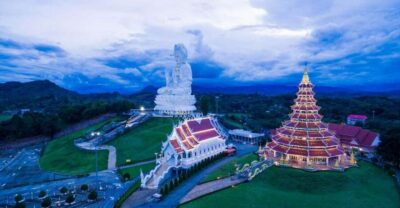
Chiang Rai White Temple, Blue Temple and more from Chiang Mai
Read our review →
Chiang Rai Day Trip from Chiang Mai City with Golden Triangle
Read our review →
Chiang Rai Temples, Golden Triangle & Boat Tour
Read our review →
Browse the lists this tour appears in