
Reviewed · CHIANG MAI COOKING CLASSES
Chiang Mai: Morning Cooking Class with Market Visit
Chiang Mai’s food makes more sense when you see the ingredients before they reach the pan. This five-hour class takes you from a local market to an organic garden, then into a kitchen to prepare Thai dishes of your choice. I especially like the chance to pick herbs yourself and the practical recipe PDF you can use once you’re home.
The instruction is a strong part of the appeal: New is praised for clear English, useful cooking tips, and a warm approach that works for beginners and experienced cooks alike. One consideration is the morning pickup: coverage is limited to selected parts of Chiang Mai, and the vehicle can run late as it collects people around town.
At a glance
- Start with a local market: See fresh ingredients for sale and learn how they are used in Thai cooking.
- Pick herbs at an organic garden: Explore how vegetables and herbs grow, then gather some for your dishes.
- Choose your menu: Options include Pad Thai, green curry, Tom Yum Kung, papaya salad, and other familiar Thai favorites.
- Cook in an air-conditioned studio: The lesson takes place in an indoor kitchen, followed by a meal of what you have made.
- Bring the recipes home: A PDF recipe book helps you repeat the dishes after the trip.
- Check the pickup area and extra fees: Selected hotel transfers are included, but visitor fees are listed separately.
From a Chiang Mai market to the cooking studio
The class begins with hotel pickup, usually between 8:30 and 9:00 a.m. The drive is part of the morning’s practical details, not the main event: pickup rounds can take time, and traffic may cause delays. Be ready in your hotel lobby five to ten minutes before your assigned time. The driver waits no longer than five minutes after that time, so do not treat the pickup window as a casual suggestion.
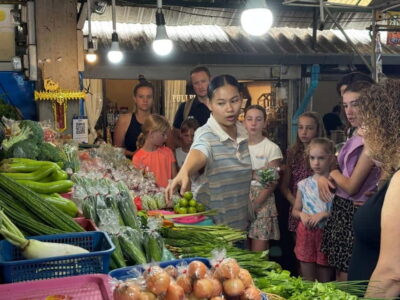
The first stop is a local market, where you can see fresh ingredients on sale and get a closer look at what goes into Thai dishes. This is useful context before cooking. Rather than meeting unfamiliar herbs and vegetables as a list on a recipe sheet, you can see them in their everyday setting and begin to recognize what you’ll use later.
The market visit is described as depending on interest, so if it matters to you, make that clear when arranging the day. A participant described it as a genuinely local market with few foreign visitors. That does not mean it will be quiet or that every market visit will feel the same, but it should be more revealing than a quick stop at a shop designed for cooking classes.
I like that the market comes before the lesson. Thai cooking often depends on balancing fresh herbs, aromatics, heat, salt, and sourness. Seeing the ingredients first gives you a better sense of what the chef is asking you to chop or add, and why a dish tastes different when the ingredients are fresh.
More cooking classes in Chiang Mai:
- Half-Day Thai Cooking Class at Organic Farm in Chiang Mai
★ 5.0 · 19,087 reviews - Chiang Mai: Cooking Class, Market & Thai Herbs Garden Tour
★ 4.9 · 4,824 reviews - Chiang Mai: Authentic Cooking Class with Market & Farm Visit
★ 4.9 · 4,546 reviews
Picking herbs in the organic garden
After the market, the class visits an organic garden. You’ll learn how vegetables and herbs are grown in Thailand, explore the farm, and pick ingredients for your cooking. It is a hands-on stop, not just a scenic pause between the market and the kitchen.
That small act of gathering your own herbs can help the recipes stick. You get a direct connection between plant and plate, and a chance to notice the ingredients before they are chopped, pounded, or stirred into a dish. If you are curious about how local food is produced, this part adds something beyond a standard cooking demonstration.
The garden visit also sets up the cooking lesson well. You can ask questions about the ingredients while they are still whole, then see how they change the flavor of a soup, curry, or salad. The information provided does not promise a particular crop or a long farm tour, so think of this as a useful introduction rather than an agricultural workshop.
Choosing dishes that suit your appetite
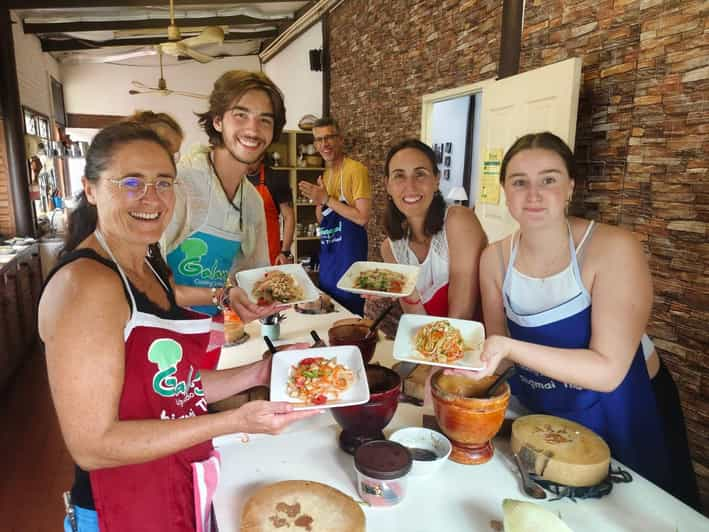
At the cooking studio, you choose from a menu of Thai favorites. The class is advertised as teaching six dishes, with options across a starter, a main course, soup, curry, and dessert. Curry paste is also part of the lesson, which helps explain how the curry begins rather than treating it as something that arrives ready-made.
For a starter, you can choose Som Tam, or papaya salad; Por Pia Thod, or spring rolls; Larb Kai, a chicken salad; or Yam Woon Sen, a glass noodle salad. These options give you different ways into Thai flavors, from fresh and crisp to savory and herb-heavy.
For a main, choices include Pad Thai, Pad See Ew, chicken with cashew nuts, or minced chicken with holy basil. This is a helpful spread if you already have a favorite dish in mind, but also if you want something you have not tried before. The instructor guides you through the chosen recipe, so you do not need to arrive knowing the techniques.
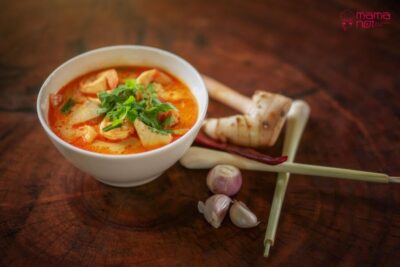
Soup choices include Tom Yum Kung, a hot and sour prawn soup; Tom Kha Kai, chicken soup with coconut milk; a vegan coconut-milk soup; or Tom Zap Kai, a hot and sour chicken soup. You can also choose green, red, yellow, Massaman, or Panang curry. The range gives you room to tailor the meal, though it is sensible to check which dishes you’ll be making when you book or confirm your selections.
Dessert finishes the menu. Options include mango sticky rice with ice cream or deep-fried banana. It is a sweet final course after the savory cooking, and a welcome reason not to arrive already full. The class specifically advises coming with an empty stomach.
Learning by cooking, not just watching
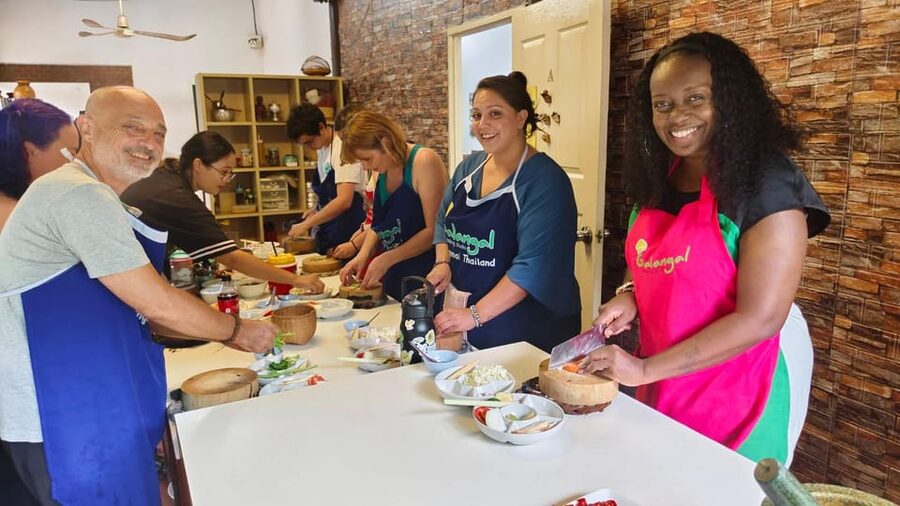
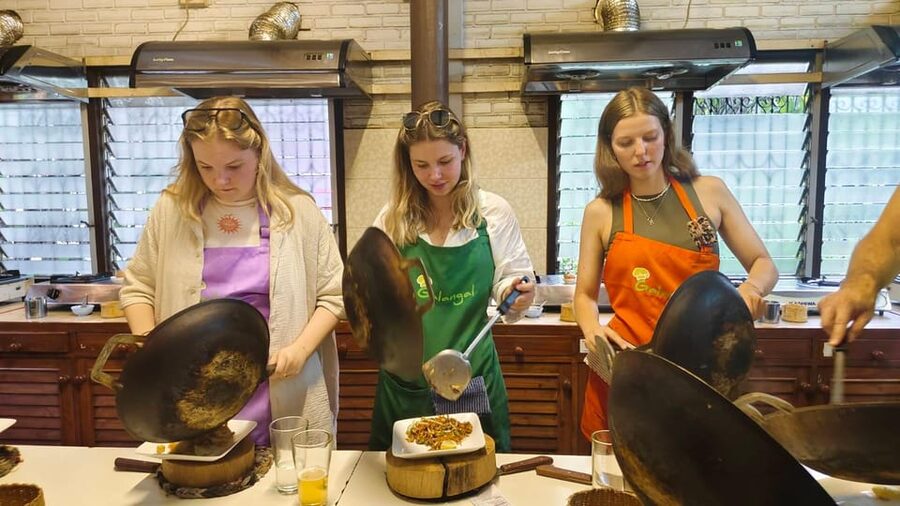
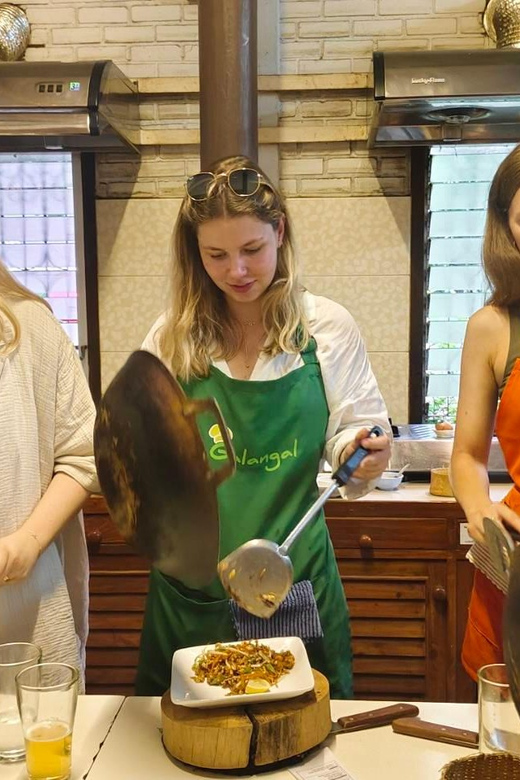
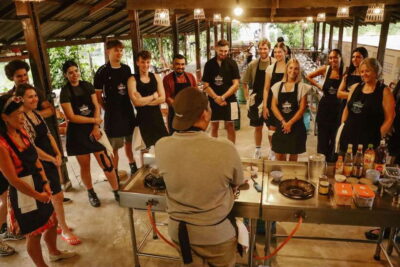
The instructor explains Thai cooking skills and leads you through the dishes step by step. The class is designed for people who are new to Thai recipes as well as those who already cook. You will do the work yourself, with guidance, rather than simply watch a chef prepare a meal.
New is the instructor name that comes up repeatedly, and the feedback points to a useful combination of clear English, patience, and enthusiasm for the food. One person described the class as well paced for both beginners and cooks, while another valued explanations of ingredients and possible substitutes available in other countries. That second detail matters if you want to make the recipes again outside Thailand, where some ingredients may be harder to find.
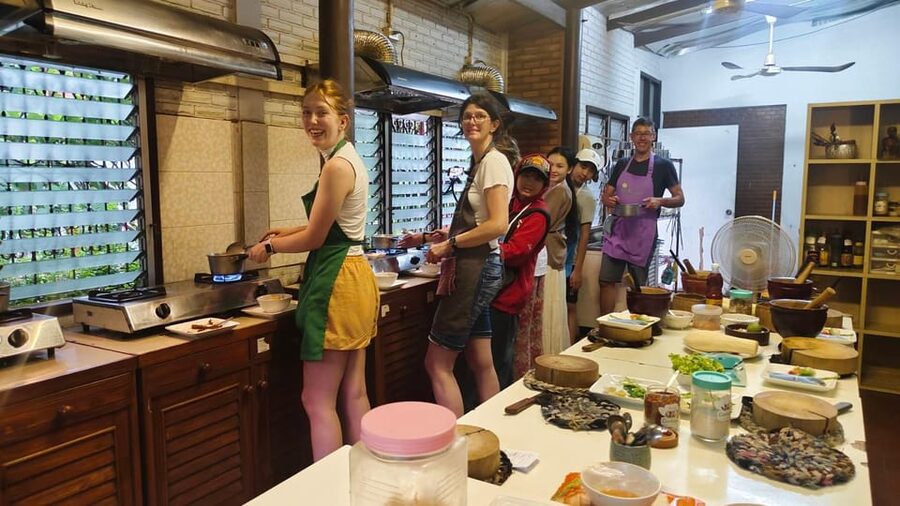
The class takes place in an indoor kitchen with an air-conditioned dining room. After cooking, you sit down and eat what you have prepared. That arrangement is practical in Chiang Mai’s heat and turns the lesson into a full meal, not a cooking session followed by another search for lunch.
The instructor’s role is especially important when you are unfamiliar with the ingredients. A recipe can tell you what to add, but a teacher can help you understand how to handle it and how the elements work together. The class is in English, and participants have specifically praised the clarity of the explanations.
More market tours in Chiang Mai:
- Chiang Mai: Cooking Class with Market and Pickup
★ 4.9 · 1,365 reviews - Chiang Mai: Evening Cooking Class and Local Market Visit
★ 4.9 · 648 reviews - Chiang Mai: Evening Local Street Food Market Tour
★ 4.8 · 604 reviews - Chiang Mai: Kalare Night Bazaar Boxing Stadium Muay Thai
★ 4.7 · 507 reviews
Dietary needs and family visits
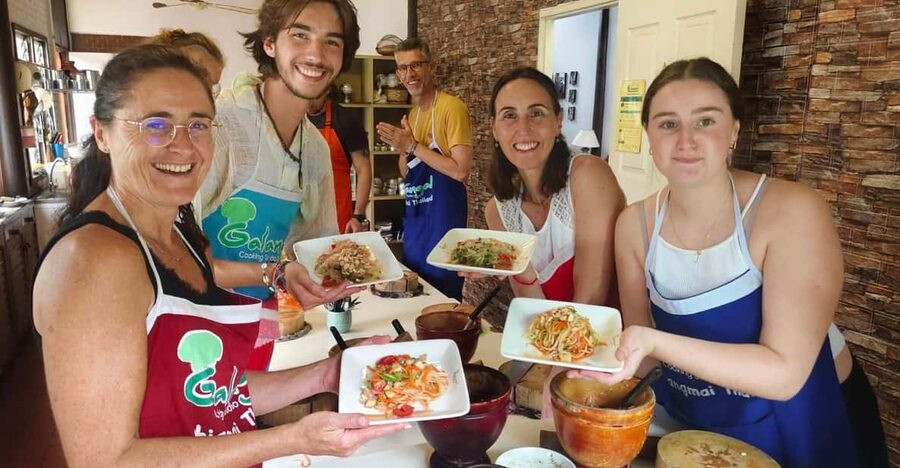
The activity says it can accommodate vegan, vegetarian, Halal, and gluten-free diets, as well as allergies. Tell the provider about your needs in advance so the menu and ingredients can be planned accordingly. The choices include a vegan coconut-milk soup, and the menu’s range gives the instructor options to work with, but it is still worth confirming your particular requirements before you go.
Families are welcome. A four-year-old joined one class and cooked alongside the adults, which suggests the activity can work well for a family with a young child. Stroller access and infant seats are available, and the activity is listed as wheelchair-accessible. If you have specific access needs, contact the provider to confirm how the market, garden, and studio portions will work for you.
What the $41 price covers
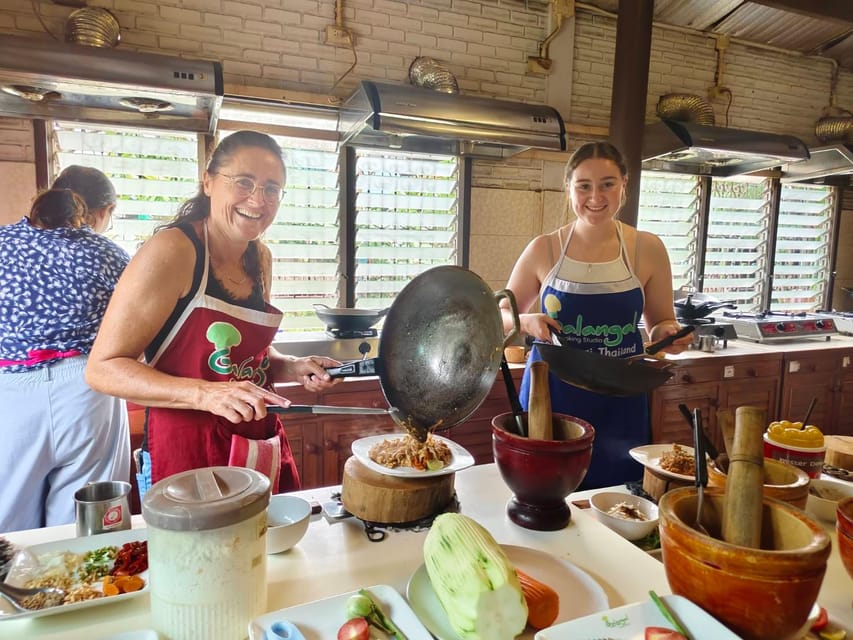
At $41 per person, the class includes hotel pickup and drop-off in its service area, the market visit, ingredients and cooking equipment, expert instruction, water, tea, coffee, and the PDF recipe book. You are paying for more than a single cooking lesson: the morning combines market orientation, the garden visit, hands-on cooking, and a prepared meal.
The included transport can make the price especially useful if your hotel is within the pickup zone. That zone covers the Old City, Santitham, and Huay Keaw Road between Kad Suan Kaew and Maya Shopping Mall, as well as some parts of Nimmanahaeminda Road, Sirimongkrajarn Road, Wat Ket Road, Chang Phueak, Chang Klan, and Chang Moi. Coverage is not guaranteed everywhere in those areas, so the provider checks your address. If your lodging is outside the service area, you may need to make your own way to the school or market.
There are also additional visitor fees listed as 500 baht per adult and 350 baht per child aged six to twelve. These are not included in the tour price, so ask the provider what they apply to when you confirm your booking. That extra cost changes the total value calculation, especially for a family.
The class has a 4.9 rating from 81 reviews, and the most consistent praise centers on the teaching, the food, the friendly atmosphere, and the market visit. That is a good sign for an activity whose quality depends on the instructor and the pace of the class. Still, one participant had trouble getting a reply about transport and needed help to confirm the address. If you have not received pickup details, follow up before the morning of the class.
Is this the right Chiang Mai cooking class for you?
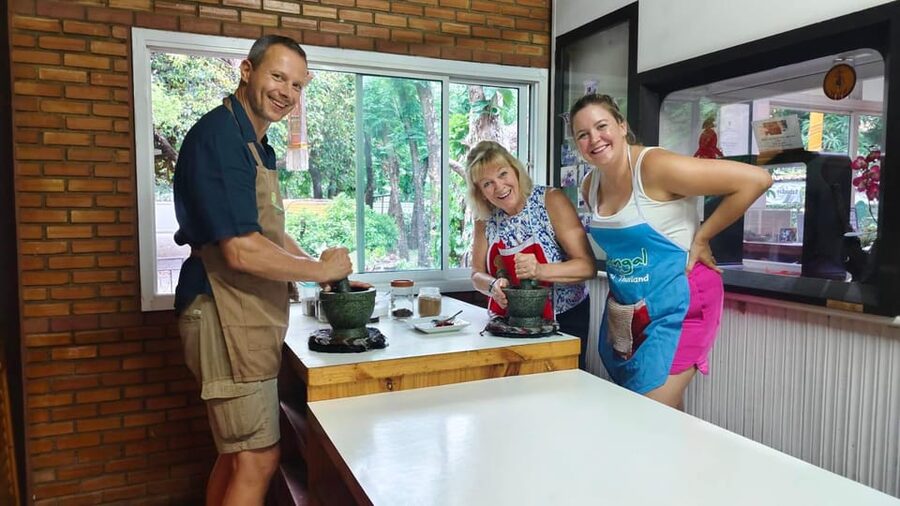
I would put this class high on the list if you want to learn several Thai dishes in one morning and prefer doing the cooking yourself. The market and garden give the lesson more context than a studio-only class, while the recipe PDF makes the experience useful after your holiday.
It also suits a mixed group of confident home cooks and complete beginners. The menu offers enough choice to help you find dishes you like, and the instructor-led format does not require prior skill. Families can consider it too, though the five-hour duration and early pickup may be a long morning for a young child.
It is less convenient if your hotel is outside the transfer area or if you need a guaranteed quick pickup. Check your address, clarify the extra visitor fees, and confirm your menu and dietary requirements in advance. If those details work for you, the combination of market, garden, cooking, and a meal makes the $41 base price a solid use of a Chiang Mai morning.
FAQ
How long is the cooking class?
The activity lasts five hours, including the market and garden visits, cooking lesson, and meal.
What time does hotel pickup take place?
Pickup is scheduled between 8:30 and 9:00 a.m. You should wait in your hotel lobby five to ten minutes before your assigned time.
Is hotel pickup available everywhere in Chiang Mai?
No. Pickup is offered in selected parts of the Old City, Santitham, Huay Keaw Road, and some nearby areas. The provider checks your address and will let you know if you need to travel to the cooking school or market yourself.
Can I go directly to the cooking studio?
Yes. You can come directly to the cooking studio if you do not want hotel transfer. The provider will send you the address and arrival time.
What dishes can I choose to make?
Options include Som Tam, spring rolls, Larb Kai, glass noodle salad, Pad Thai, Pad See Ew, chicken with cashew nuts, minced chicken with holy basil, several soups, five curry types, and two desserts.
Can the class accommodate dietary needs?
The activity is offered for vegan, vegetarian, Halal, and gluten-free diets, and for people with allergies. Tell the provider about your needs in advance.
Is the activity accessible for wheelchairs and strollers?
Yes. It is listed as wheelchair-accessible and stroller-accessible. Infant seats are also available.
What extra fees are listed?
The activity lists a separate fee of 500 baht per adult and 350 baht per child aged six to twelve. These fees are not included in the $41 per-person price.
More hands-on workshops in Chiang Mai
- Thai and Akha Cooking Class in Chiang Mai
★ 5.0 · 4,358 reviews - Chiang Mai: Cooking Class with Organic Farm at Mama Noi
★ 4.9 · 1,151 reviews - Cooking Class with Organic Farm in Chiang Mai at Mama Noi
★ 5.0 · 502 reviews - Tomyumthai Cooking Class in Chiang Mai
★ 5.0 · 234 reviews
More shopping trips in Chiang Mai
- Evening Cooking Class in Organic Farm with Local Market Tour
★ 5.0 · 394 reviews - Chiang Mai: Elephants, Sticky Waterfalls, Market and Temple
★ 4.9 · 227 reviews - Cooking Morning Class Chiang Mai Visit Organic Garden and Market
★ 5.0 · 211 reviews - Chiang Mai Temples and Market Tuk-Tuk Evening Night Tour
★ 4.5 · 201 reviews
Newest tours in Chiang Mai
- 6 Days Golden Triangle Loop from Chiang Mai★ 5.0 · 8 reviews
- Walk With Monks Collecting Alms(meeting point maybe change)★ 4.9 · 8 reviews
- Workshop Making Herbal ball & herbal inhaler★ 4.3 · 3 reviews
- Zipline+Sticky waterfall+Long Neck Village Private Tour★ 5.0 · 22 reviews
- Chiang Mai Zipline White Water Rafting and Elephant Sanctuary★ 4.0 · 11 reviews
- Full Day Yoga, Meditation, and Thai Cultural Immersion in Chiang Mai★ 5.0 · 3 reviews
- 2 Hours Wow hatcha lanna package – Free transportation★ 5.0 · 31 reviews
- Trek to a Jungle Waterfall★ 5.0 · 14 reviews
Chiang Mai Cooking Classes, compared.
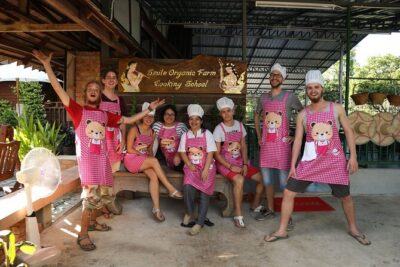
Half-Day Thai Cooking Class at Organic Farm in Chiang Mai
Read our review →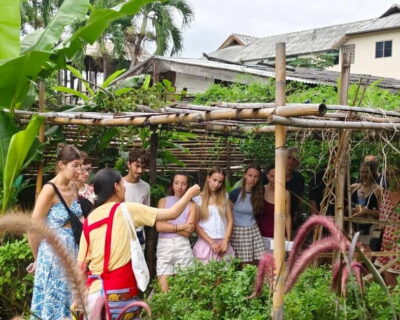
Cooking Class, Market & Thai Herbs Garden Tour
Read our review →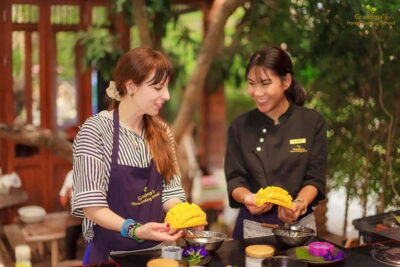
Authentic Cooking Class with Market & Farm Visit
Read our review →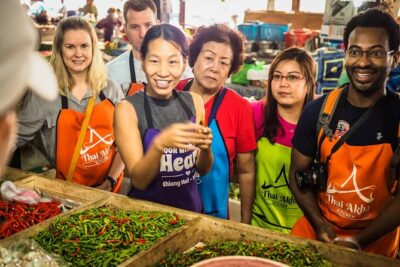
Browse the lists this tour appears in