
Reviewed · CHIANG MAI TEMPLE TOURS
Chiang Mai Temples Visit Walking Tour with Ex-Monk Guide Part 2
Chiang Mai’s temples make more sense when someone can explain what you’re seeing and why it matters. On this walking tour, former monk guide Katoon leads you from the Three Kings Monument to four temples, connecting Buddhist practice with the city’s history and architecture.
I like two things in particular: you can ask questions about Buddhism and temple customs as you go, and the route includes places with different cultural and architectural stories, from the old Wat Chiang Man to a Tai Yai temple and a wooden Lanna chanting hall. Katoon is described as patient with both adults and children, and willing to talk about his own time as a monk.
The main consideration is the pace and timing: it’s a 3.5-hour afternoon walk, with several temple visits, and bottled water is not included. If you prefer a short, self-guided temple stop or want a tour focused mainly on photo opportunities, this may be more discussion than you’re after.
- Four temples, one walking route: Visit Wat Chiang Man, Wat Pa Pao, Wat Chiang Yuen, and Wat Lok Molee.
- A guide with first-hand monastic experience: Katoon can explain Buddhist customs and answer questions about his former life as a monk.
- A strong mix of stories: The stops include Chiang Mai’s early city history, Tai Yai heritage, Lanna architecture, and a temple’s role in the Lanna kingdom.
- Time to ask questions: The tour is built around explanation and conversation, not just moving from one temple gate to the next.
- Small-group limit: No more than 20 people can join, though the tour is not private.
- Plan for the afternoon: Meet at 1 pm at the Three Kings Monument; the tour lasts about 3 hours and 30 minutes.
Why a former monk changes the temple visit
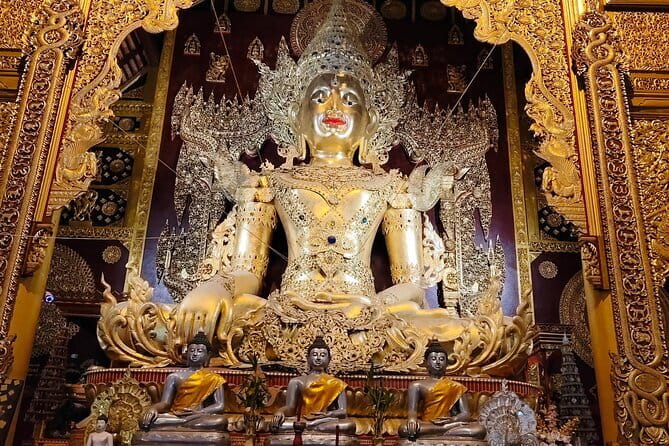
A temple can be beautiful and still leave you guessing. You may notice an image, a ritual gesture, or a hall’s decoration without knowing what it means. This tour’s central advantage is the chance to ask someone who has lived within Buddhist practice to explain the customs and ideas behind what you see.
Katoon’s experience as a former monk is especially useful for questions that a guidebook may not answer well. The tour description and guest comments point to discussion of Buddhist teachings, how to pray or make a respectful offering, and what monastic life was like for him. Buddhism is not presented simply as a list of dates and temple names. You can ask questions and hear explanations in the setting where the practices take place.
That doesn’t mean you should expect a meditation class or a formal spiritual retreat. The tour is a temple walk with cultural and religious interpretation. The overview mentions mindfulness and well-being as possible benefits of Buddhist-themed tours, but the specific activities listed here are visits to temples and guided explanations. Go for a thoughtful introduction, not a guaranteed meditation session.
The distinction matters if you are comparing this with a standard city sightseeing walk. Here, the temples are not just stops between photo opportunities. The guide’s role is to help you understand what makes each place significant, while leaving room for your own questions and interests.
Starting at the Three Kings Monument
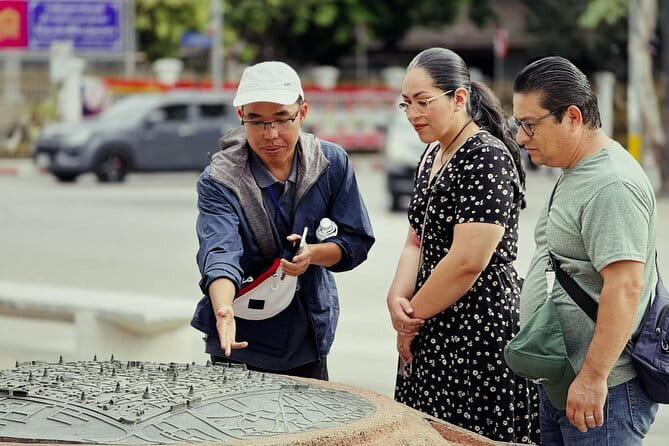
The group meets at the Three Kings Monument at 1 pm. This is the tour’s gathering point, where the guide gives an introduction before the walk begins. The opening stop is brief, about 10 minutes, and admission is free.
Arrive with enough time to find the monument and locate the group. The tour is capped at 20 people, which sets a limit on group size but does not mean you will have a private guide. If you want to ask questions, speak up as they come to mind. The guide’s willingness to answer and encourage questions is one of the tour’s clearest strengths.
The afternoon start can work well if you want a guided activity after a morning of independent sightseeing. It also means you should keep an eye on the clock: the tour runs about three and a half hours, so it takes up a good part of the afternoon. The end point is the same as the meeting point.
More temple tours in Chiang Mai:
- Chiang Mai: White, Red/Black & Blue Temples Tour with Lunch
★ 4.2 · 2,017 reviews - Chiang Mai: Doi Suthep and Wat Umong Enchanting Evening Tour
★ 4.6 · 1,811 reviews - Chiang Mai: Doi Suthep, Wat Umong, and Pha Lat Sunrise Tour
★ 4.7 · 1,425 reviews
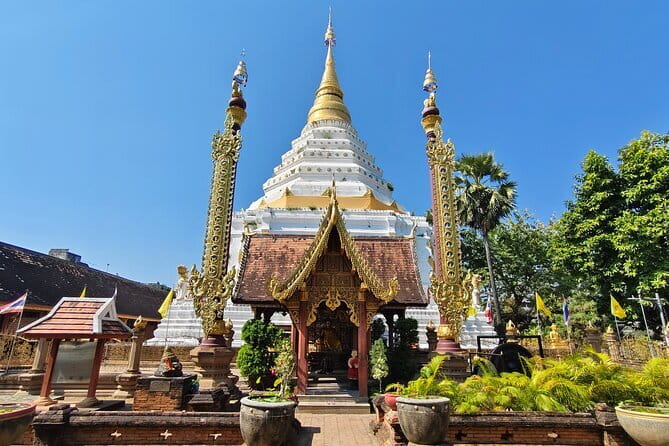
Wat Chiang Man, Chiang Mai’s early temple
The first temple stop is Wat Chiang Man, with about 45 minutes set aside for the visit. Built in 1296, it is regarded as one of Chiang Mai’s oldest and most important temples. It is also believed to be the first temple constructed in the city, making it a natural starting point for a tour that aims to explain how Chiang Mai’s religious and civic history developed.
This is where the guide can give you a useful frame for the rest of the route. Rather than seeing each temple as an isolated monument, you can begin to connect the city’s founding period with the religious institutions that followed. Ask Katoon what details are important to notice and how the temple’s role fits into Buddhist life today.
The 45-minute visit gives you more than a quick look from the entrance, though the exact balance between explanation and independent time can vary with the group. If you like to linger over architectural details or take photographs, be mindful that four temples remain on the schedule. The point is not to inspect every corner at length, but to leave with a clearer understanding of why the site matters.
Wat Pa Pao and Tai Yai heritage
Wat Pa Pao shifts the story toward Chiang Mai’s Tai Yai community. The temple is identified as the first temple of the Ngiaw, also called Tai Yai, in Chiang Mai. It was built in 1883 during the reign of Prachao Intawichayont, through the efforts of Lady Bua Lhai, described as a Tai Yai concubine of the king.
That background gives this stop a particular value: the temple’s story is not only about Buddhism in general, but also about the communities and patrons who shaped religious life in the city. You can ask how Tai Yai identity is reflected in the temple and how its history relates to Chiang Mai’s broader past. The source information does not specify particular design features, so let the guide point out what is meaningful on site rather than expecting a set architectural checklist.
About 30 minutes are allocated here. That is enough for an introduction and a closer look, but it is the shorter of the main visits. If this history catches your interest, use the time to ask focused questions rather than saving them all for the end.
Wat Chiang Yuen and the Lanna kingdom
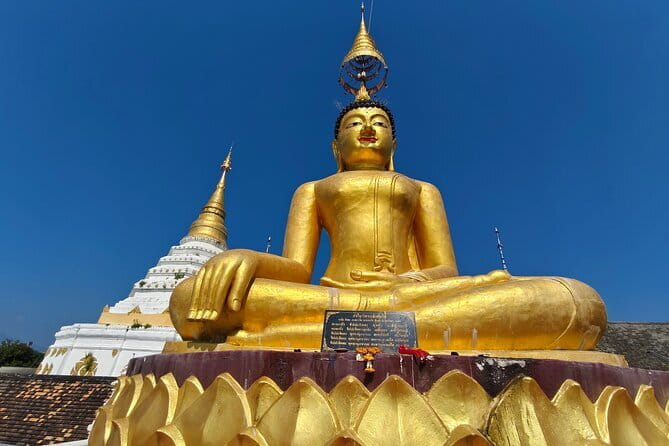
Wat Chiang Yuen is known for its ancient Burmese colonial gate and beautiful pavilion. It also has a place in the history of the Lanna kingdom. Those details make it a useful stop for noticing how Chiang Mai’s temple architecture and cultural influences are not all alike.
The visit lasts about 30 minutes. The Burmese colonial gate gives you a clear feature to look for, while the pavilion offers another point of comparison with the temples already visited. This is a good moment to ask Katoon how the site’s history connects with the Lanna kingdom and what role the temple played. The available tour details establish that the role was important, but don’t spell out the specific events or functions, so the guide’s explanation is the part to listen for.
This stop also helps break up the route’s focus on founding-era history. Rather than treating every temple as interchangeable, you can compare the stories and visual details that distinguish them. Keep your expectations flexible: the visit is brief, and the tour covers several sites in one afternoon.
More walking tours in Chiang Mai:
- Chiang Mai: 3 Hour Old City and Temples Guided Walking Tour
★ 4.6 · 1,568 reviews - Chiang Mai: Historic Temples and City Guided Walking Tour
★ 4.7 · 650 reviews - Chiang Mai: Temple And City Walking Tour Part I
★ 4.7 · 244 reviews - Chiang Mai: Local Food and Markets Guided Walking Tour
★ 4.3 · 175 reviews
Wat Lok Molee and its wooden chanting hall
The final listed temple is Wat Lok Molee, with about 45 minutes for the visit. Its wooden chanting hall is noted for traditional Lanna architecture. After hearing about a city’s early temple, Tai Yai heritage, and a site linked to the Lanna kingdom, this hall offers a chance to finish by looking closely at a specific architectural feature.
A chanting hall is also a useful prompt for questions about how temple spaces are used. Ask what the hall is for, what to notice in its construction, and how chanting fits into Buddhist practice. The tour information identifies the hall as wooden and traditional in style, but does not promise a ceremony or chanting demonstration. Treat it as a guided visit, not a scheduled ritual.
The longer time allotment here gives the guide room to explain the building and answer questions. It may also help you reflect on the different temple styles and histories you have encountered. The tour ends back at the Three Kings Monument, so you do not need to arrange a separate return transfer.
What the 3.5-hour format means for you
The schedule lists about 10 minutes at the meeting point and 45, 30, 30, and 45 minutes at the four temples. That adds up to 160 minutes, leaving part of the 3.5-hour tour for walking between sites and other transitions. The exact walking distances and pace are not specified, but this is a walking tour, so plan for several hours on your feet.
Wear comfortable footwear and bring water. Bottled water is not included, and a warm afternoon can make even a moderate walk less pleasant without it. The tour requires good weather; if poor weather cancels it, you are offered another date or a full refund.
The tour is offered with an English- or Chinese-speaking guide. Confirm that the language option you want is available when booking. The maximum group size is 20, a manageable cap for a guided walk, but you may still need to speak up so the guide can hear your questions.
Is $25.92 good value?
At $25.92 per person, this is a reasonable price if you want interpretation as well as entry to the temples. Admission tickets are listed as free, and the tour does not include bottled water or all fees and taxes. In practical terms, you are paying mainly for a guided route and the time and insight of someone who can explain Buddhist customs, local history, and his own monastic experience.
The value is strongest for a first visit to Chiang Mai, especially if you are curious about Buddhism but unsure how to approach temple etiquette or what to look for. You can visit temples independently, but you would need to do more research to gain the same conversational context. The guide’s openness to questions is part of what makes this format useful.
It is a weaker value if you already know the city’s temples well, want a private guide, or prefer to spend an hour or more at each site. Four stops in one afternoon create variety, but they also mean you will not have unlimited time at any one temple. The advertised average booking lead time is 11 days, so this is an activity worth arranging ahead if it is central to your plans.
Who should book this temple walk?
I’d recommend it to curious first-time visitors, people interested in Buddhist practice, and families who want explanations rather than a silent procession through sacred sites. The guide has been described as patient with children, including a family group with children aged two and seven. That is encouraging, though the tour remains a 3.5-hour walk, so consider your own children’s stamina and interest before booking.
It also suits visitors who enjoy asking questions and hearing a personal perspective. Katoon’s former monastic life gives the tour a human element that is difficult to get from a signboard. If you are shy about asking questions, remember that the guide is described as encouraging them, and you do not need to be an expert in Buddhism to take part.
Choose another format if you want a fast checklist of famous sights, extensive time for photography, or a private conversation without a group. This tour covers four temples in a single afternoon and allows a maximum of 20 people. Its strength is the combination of variety and explanation, not a slow, solitary visit.
Should you book it?
Book this tour if you want to understand more than what a temple looks like. The four stops offer a useful cross-section of Chiang Mai’s religious and cultural history, while former monk Katoon can answer questions about Buddhist practice and his own experience. At $25.92, it is a fair price for that guided context, especially if this is your first temple visit in the city.
Think twice if you are not keen on a long afternoon walk, need a private guide, or want to spend most of your time at one site. Bring water, wear comfortable shoes, and go ready to ask questions. For a practical, personal introduction to Chiang Mai’s temples, this is a strong choice.
FAQ
How long is the tour?
The tour lasts approximately 3 hours and 30 minutes.
What time does the tour start?
It starts at 1 pm.
Where does the tour meet?
The meeting point is the Three Kings Monument on Prapokklao Road in Chiang Mai.
Where does the tour end?
It ends back at the Three Kings Monument, the same place where it begins.
Which temples are included?
The route visits Wat Chiang Man, Wat Pa Pao, Wat Chiang Yuen, and Wat Lok Molee.
Who guides the tour?
The guide is Katoon, a former monk. The tour is offered with an English- or Chinese-speaking guide holding a TAT license.
What is the maximum group size?
The tour has a maximum of 20 people.
Are temple admission tickets included?
Admission tickets for the listed stops are free. All fees and taxes are not included.
Is bottled water included?
No. Bottled water is not included.
Can I cancel for a refund?
Yes, you can cancel for a full refund up to 24 hours before the experience starts. If poor weather cancels the tour, you will be offered another date or a full refund.
More meditation sessions in Chiang Mai
- Wat Phra That Doi Suthep spiritual Sunrise Tour with an Ex-monk
★ 5.0 · 798 reviews - Spiritual Sunrise Wat Doi Suthep, Pha Lat, Alms & Meditation
★ 4.9 · 674 reviews - Chiang Mai: Elephant Sanctuary, Monk Trail & Doi Suthep Tour
★ 4.9 · 563 reviews - Chiang Mai: Evening Chanting & Meditation
★ 4.5 · 69 reviews
Newest tours in Chiang Mai
- 6 Days Golden Triangle Loop from Chiang Mai★ 5.0 · 8 reviews
- Walk With Monks Collecting Alms(meeting point maybe change)★ 4.9 · 8 reviews
- Workshop Making Herbal ball & herbal inhaler★ 4.3 · 3 reviews
- Zipline+Sticky waterfall+Long Neck Village Private Tour★ 5.0 · 22 reviews
- Chiang Mai Zipline White Water Rafting and Elephant Sanctuary★ 4.0 · 11 reviews
- Full Day Yoga, Meditation, and Thai Cultural Immersion in Chiang Mai★ 5.0 · 3 reviews
- 2 Hours Wow hatcha lanna package – Free transportation★ 5.0 · 31 reviews
- Trek to a Jungle Waterfall★ 5.0 · 14 reviews
Chiang Mai Temple Tours, compared.
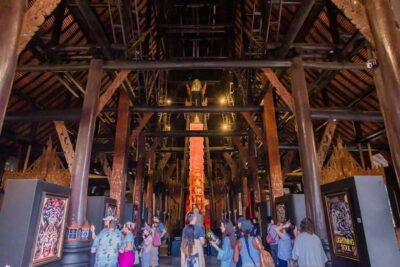
White, Red/Black & Blue Temples Tour with Lunch
Read our review →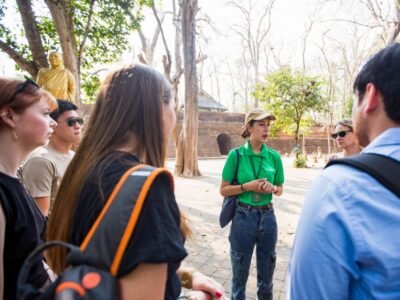
Doi Suthep and Wat Umong Enchanting Evening Tour
Read our review →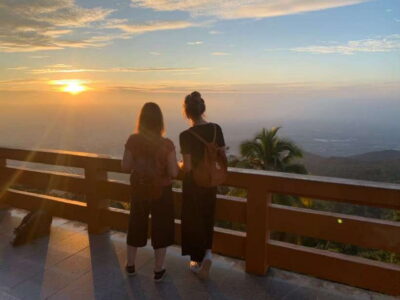
Doi Suthep, Wat Umong, and Pha Lat Sunrise Tour
Read our review →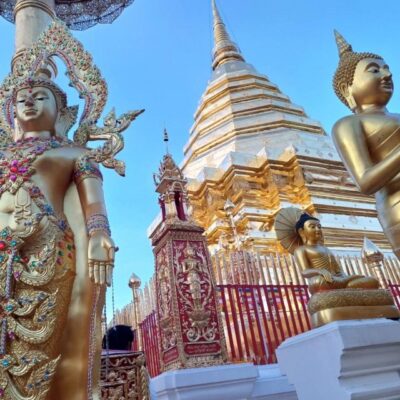

Spiritual Sunrise Wat Doi Suthep, Pha Lat, Alms & Meditation
Read our review →
Half Day Morning Wat Pha Lat & Wat Phra That Doi Suthep Tour
Read our review →
Browse the lists this tour appears in